"My floors look so amazing! Beautiful craftsmanship. They did my entire upstairs in one day. Very professional and I am so happy with the results."
Best Waterproof Flooring for Indianapolis Basements
Basements are below grade, so moisture is a question of when, not if. Here is the flooring that holds up - and what to avoid.
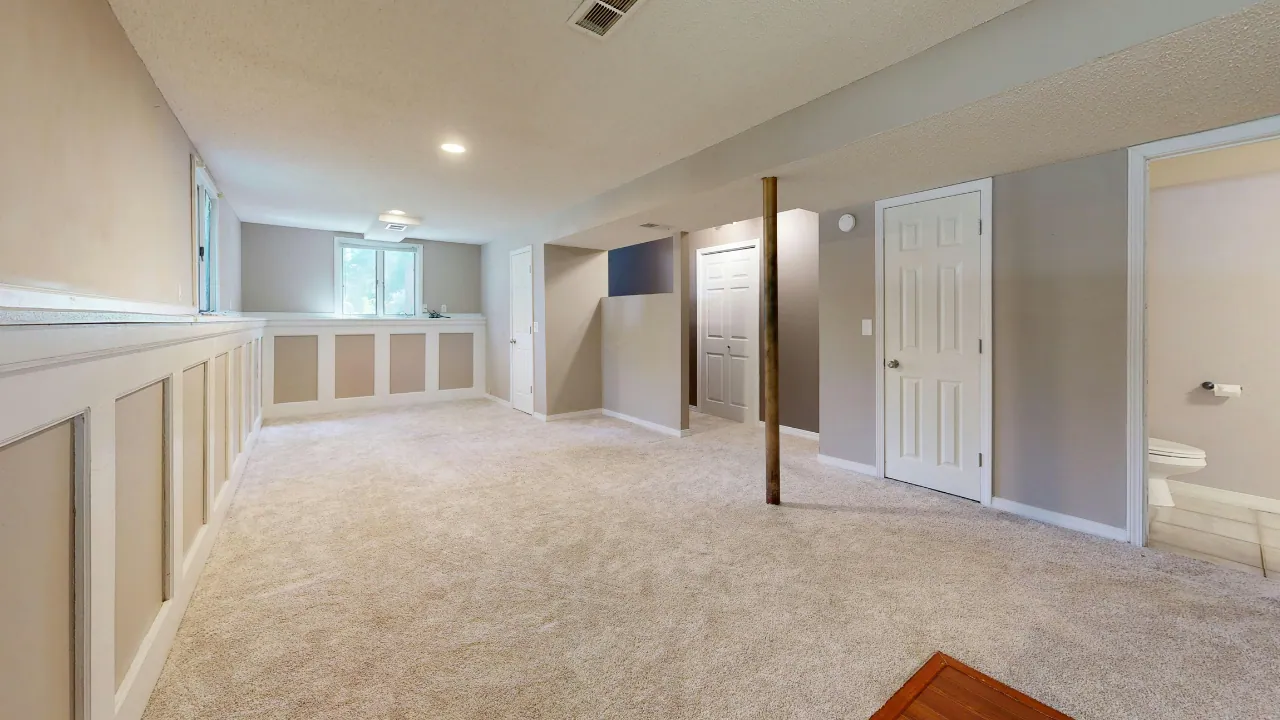
A finished basement adds real living space, but it sits below grade where moisture can wick up through the slab. That rules out solid hardwood and makes a few specific products the right call.
Why solid hardwood does not belong below grade
Solid 3/4-inch hardwood expands and contracts with humidity. Below grade, where slab moisture and seasonal swings are higher, a solid plank floor can cup, gap, or warp. It is the wrong tool for a basement no matter how well it is installed.
Luxury vinyl plank: the default basement floor
Luxury vinyl plank is 100% waterproof, installs as a floating click-lock floor over a vapor barrier, and shrugs off the puddle that did not get caught in time. It looks like real wood at arm's length and handles the kids-and-dogs reality of a basement rec room. For most Indianapolis basements, LVP is the answer.
Engineered hardwood: real wood that tolerates a slab
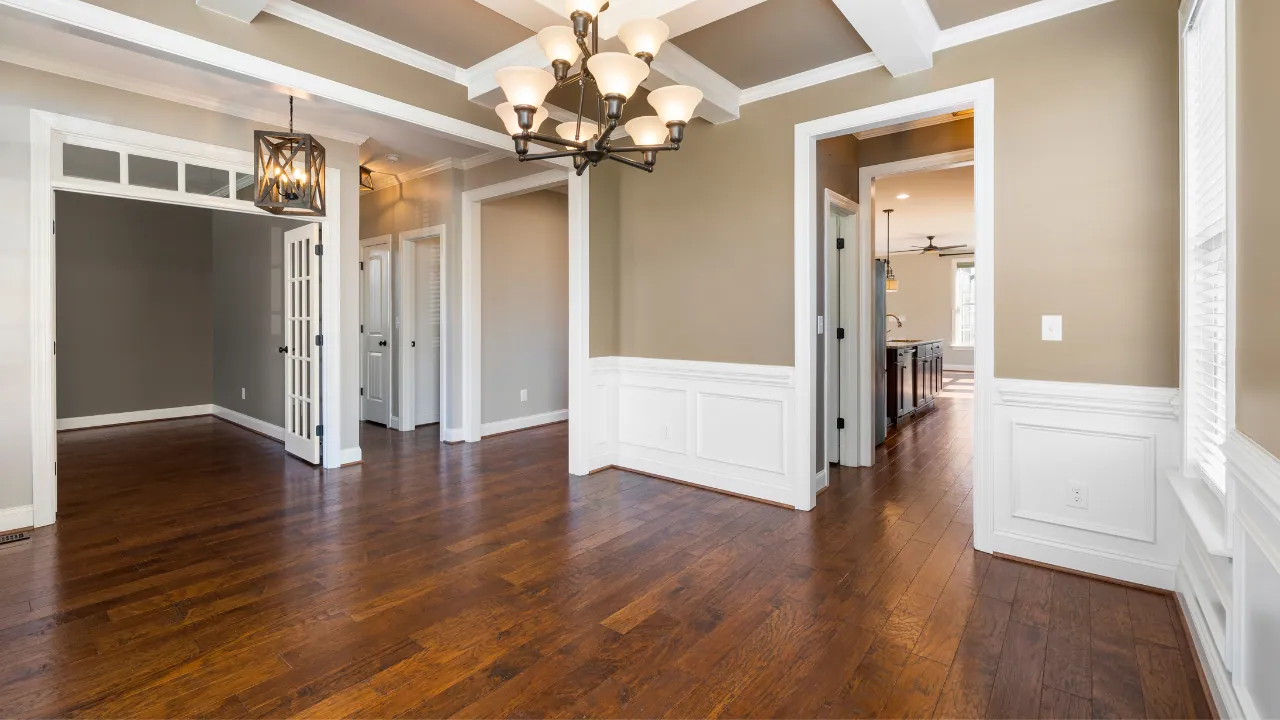
If you want genuine wood underfoot, engineered hardwood bonds a real sawn-wood wear layer to a stable plywood core that does not move the way solid wood does. It can be glued down or floated over a slab and is compatible with radiant heat - a good fit for a higher-end finished basement.
Prep is everything down there
Whatever you choose, the slab has to be tested for moisture and leveled first. We measure subfloor moisture, set the surface to spec, and document the readings with your warranty paperwork before the first plank goes down. Skip that step and even a waterproof floor can fail at the seams.
Frequently asked questions
- What is the best flooring for an Indianapolis basement?
- Luxury vinyl plank in most cases. It is vinyl throughout with no wood in the core, so it is genuinely waterproof rather than water-resistant, and it is unbothered by the moisture a concrete slab passes upward year-round. Engineered hardwood is the alternative when you want real wood below grade.
- Can I put solid hardwood in a basement?
- It is not recommended. A concrete slab passes moisture vapour upward from the ground continuously, and solid hardwood absorbs that moisture from below and moves - cupping, gapping or lifting. Engineered hardwood is built on a stable core specifically to handle that condition.
- Does a basement floor need a moisture barrier?
- Almost always below grade. We take a moisture reading on the slab during the measure rather than assuming, and specify the barrier and underlayment based on what the slab actually reads. Skipping that step is the most common reason a basement floor fails early.
- Is carpet a bad idea in a basement?
- Not necessarily, over a proper vapour barrier and in a space that has never taken water. It still works well for a lower-level media room. But in any basement with a history of moisture, a waterproof hard surface is the safer specification.
Explore the pages in this guide
Book a free in-home design consultation.
Factory-direct pricing across Indianapolis, Carmel, Fishers, and the surrounding metro. Quick installs of upper-end USA products - most projects wrap in 1 to 2 weeks, backed by a 1-year labor warranty plus the manufacturer's lifetime warranty - up to a 50-year hard surface lifespan.