
HK
Haleigh Kessler
Greater Indianapolis
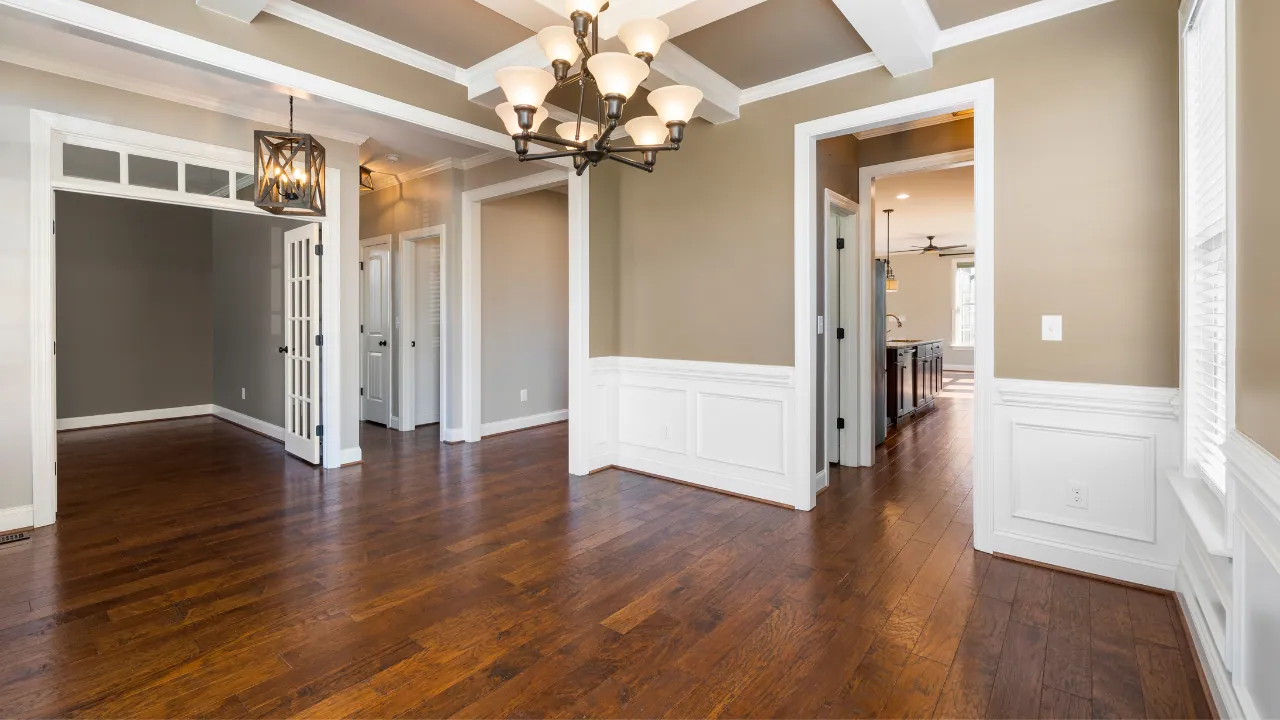
"My floors look so amazing! Beautiful craftsmanship. They did my entire upstairs in one day. Very professional and I am so happy with the results."
Google Review
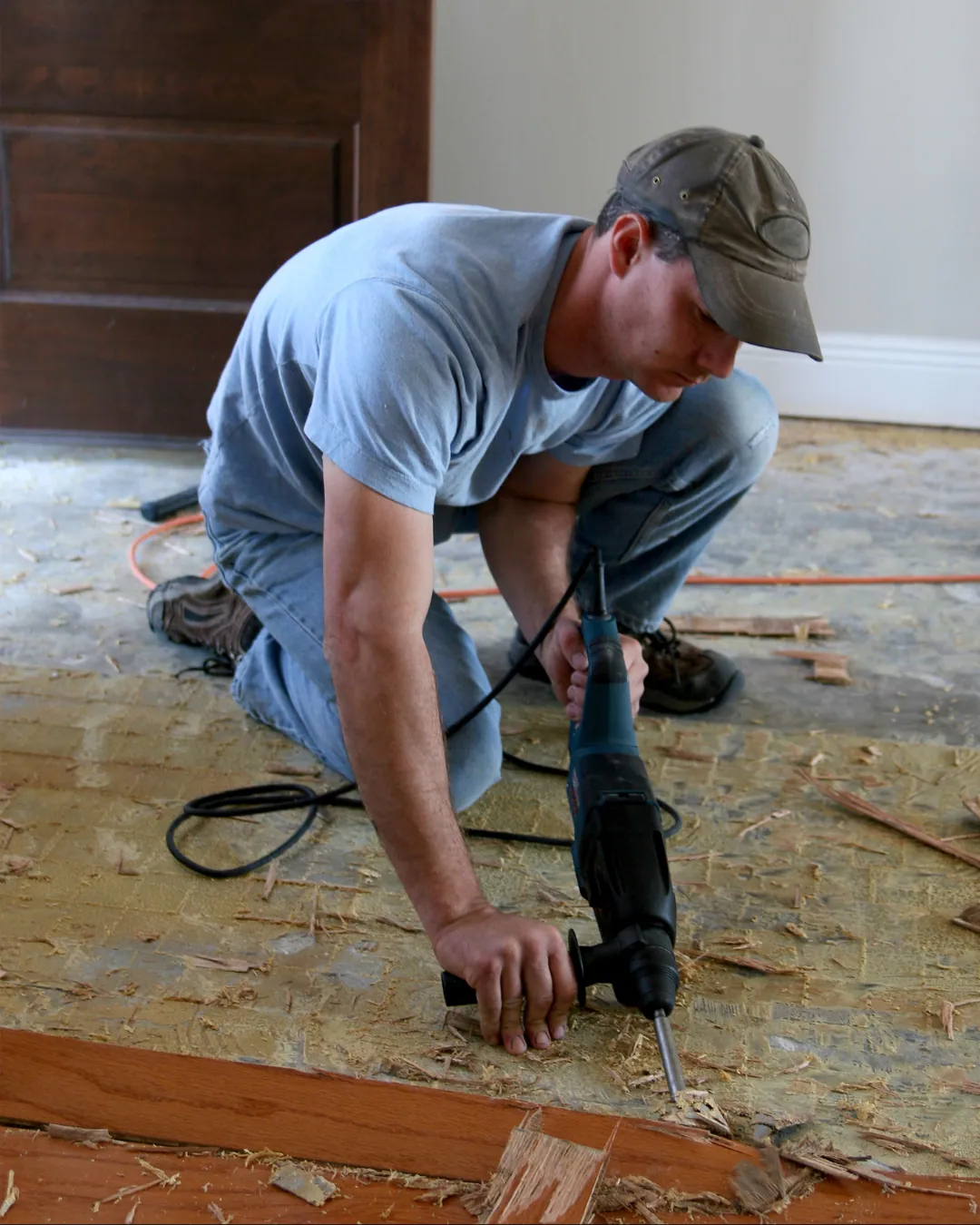
People assume a damaged floor means a replaced floor. A fair proportion of what we look at is a repair measured in boards rather than rooms.
A lot of the calls we take start with someone assuming they need a whole new floor. Often they do not. Damaged boards, a loose transition strip, a squeak, a patch worn through by a door — these are repairs, and the gap between repairing and replacing is large enough to be worth an hour of somebody looking properly.
A gouge, a burn, a pet-damaged section or boards under an old leak do not require replacing a floor. Individual boards can be lifted out and replaced.
The honest limitation is matching. Your existing floor has aged and changed colour with light exposure, so a new board in the same species will not match on day one, though it closes over time.
Where an exact match matters, the trick is to take boards from somewhere invisible — inside a closet, under a permanent appliance — and put the new material in the hidden spot instead. That is the difference between a repair you notice and one you do not.
Movement, nearly always. Either the floor is moving against the subfloor or the subfloor against the joists beneath, and two surfaces are rubbing where something has worked loose.
The fix depends on access. With a basement or crawlspace below it can often be handled from underneath without disturbing your floor at all. Without one, it means refastening from above and concealing the fixings.
It is worth combining with any other work, because the marginal cost is small once someone is already on site.
The strip where one flooring type meets another takes more abuse than any other few inches in the house, and it is the first thing to come loose.
It is also the detail that most often gets done badly on an otherwise good installation. A transition fixed rigidly through a floating floor pins that floor down, which causes the planks to lift elsewhere because the expansion has nowhere to go. Getting the right profile, fixed the right way, is a genuinely small job with an outsized effect.
With laminate and click-together vinyl, planks that have risen against each other usually mean the floor had nowhere to expand.
These floors need a gap around the perimeter, hidden under the baseboard. When that gap was cut too small, or when something later pinned the floor, the expansion has to go somewhere. Releasing the perimeter often resolves it without replacing a single plank.
There are cases where a repair is money spent twice, and we would rather say so. If the subfloor has failed over a meaningful area, if the same failure keeps recurring across the whole floor, or if the material is discontinued and a visible mismatch would bother you daily, replacement is the honest answer.
The same goes for a floor that is simply worn out everywhere, where the damaged patch is just the most visible symptom.
Plenty of larger outfits will not quote a two-board repair. We would rather do the small job well and be the people you call when the whole floor is due, and small work also tells us what shape the rest of the floor is in.
If you are not sure whether what you have is a repair or a replacement, that is exactly the thing worth having looked at rather than guessed.
Factory-direct pricing across Indianapolis, Carmel, Fishers, and the surrounding metro. Quick installs of upper-end USA products - most projects wrap in 1 to 2 weeks, backed by a 1-year labor warranty plus the manufacturer's lifetime warranty - up to a 50-year hard surface lifespan.