
B
ben
Greater Indianapolis
"Best quality products on the market and the installers were easy to communicate with. Would highly recommend."
Google Review
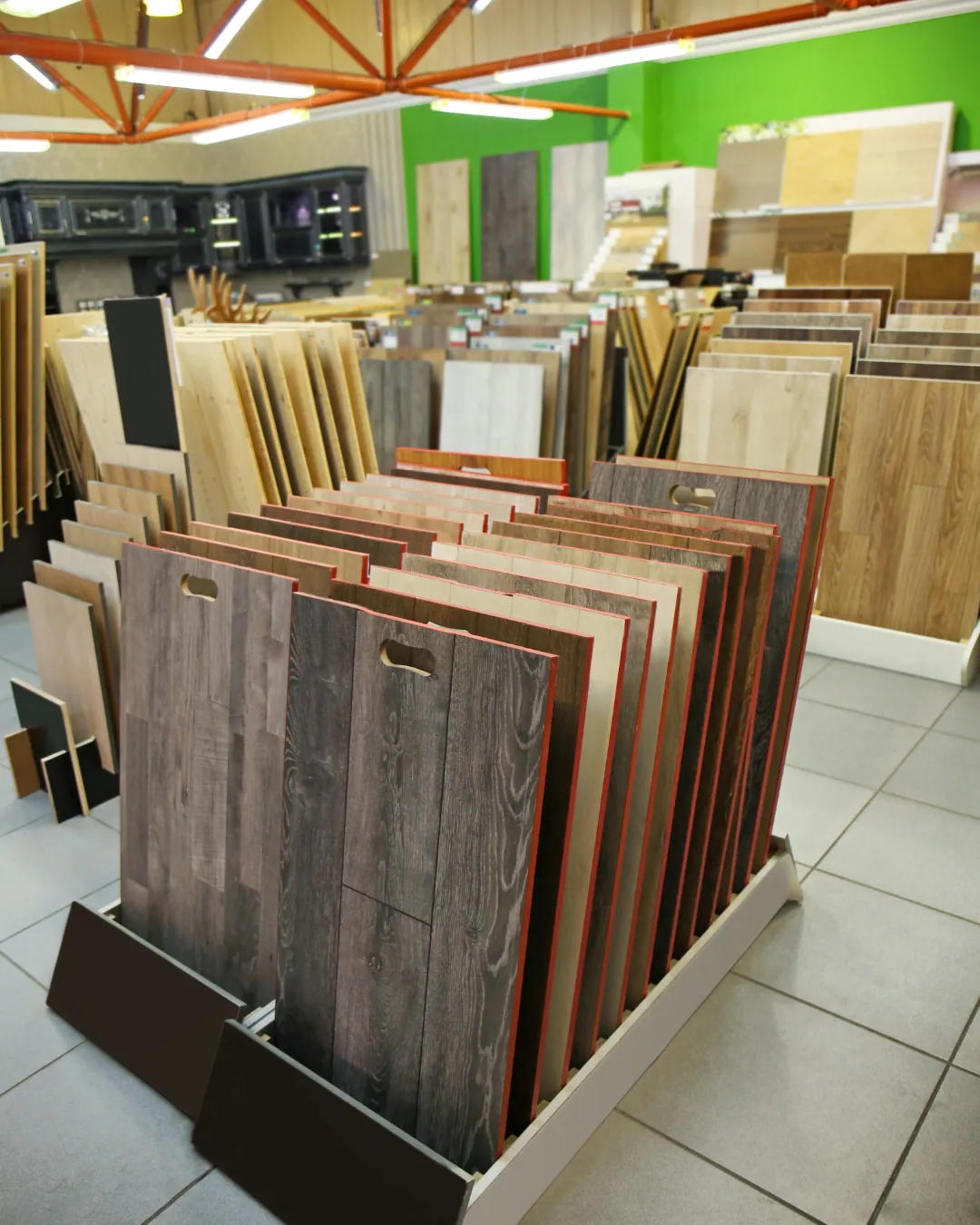
Showroom light flatters everything. How to judge a floor color in your own house, against the things that are staying, so the decision still looks right in year ten.
Material is the decision people research. Color is the decision they lose sleep over, and it is the one they live with. A floor is the largest continuous surface in a house and the last thing anyone changes - paint gets redone, furniture gets replaced, rugs come and go, and the floor stays. Which makes it worth an afternoon rather than an evening of scrolling. None of what follows is about taste. It is about the handful of practical things that decide whether a color you loved on a sample still reads right once it covers twelve hundred square feet of your own house.
Every flooring showroom on earth is lit to make product look good: bright, even, from overhead, and usually cooler in tone than anywhere you actually live.
Your house is not that. Your rooms have one or two windows facing a single direction, walls that bounce their own color back onto the floor, and lamps running warm after dark. A plank that looked crisp and neutral under showroom light can read yellow in a south-facing room and grey in a north-facing one, in the same house, on the same day.
So judge samples where the floor is going. Get the largest samples you can. Lay them flat on the floor rather than holding them up - light striking a vertical sample behaves nothing like light striking a horizontal one, and that single mistake accounts for a lot of surprise on install day. Then look at them three times: morning, mid-afternoon, and after dark with the lamps on.
This is the entire reason we bring the line to your kitchen table instead of asking you to decide under someone else's lighting. It is the cheapest possible way to avoid the most expensive kind of mistake.
The floor should be chosen against the things you are not replacing: cabinets, trim, interior doors, countertops, stone, a brick fireplace, the stair rail.
Everything else in the room is cheaper and easier to change than the floor. Paint is a weekend. A sofa is a delivery. If a floor and a sofa disagree, replace the sofa. If a floor and the kitchen cabinets disagree, you are looking at that argument every day until one of them goes, and it will not be the floor.
What matters is undertone rather than shade. Woods and wood-looks run warm - red, orange, yellow - or cool, toward grey and taupe. A warm floor against cool grey cabinetry fights even when both are individually beautiful, and most people cannot name why the room feels slightly off.
Test it properly. Hold the sample directly against the cabinet door and the trim, touching, with no gap between them. A gap lets your eye forgive a mismatch that will be obvious once the floor runs right up to the toe kick. And check the sample against your actual white trim rather than a photograph - trim whites vary enormously, and a sample shot against a different white is not the comparison you think it is.
Dark floors photograph beautifully and show absolutely everything. Dust, lint, pet hair, footprints, and drywall dust for weeks after any work in the house. In a home with a dog and a door to the yard, that is a daily tax rather than an occasional one.
Very light floors hide dust well and show the opposite set of problems: tracked-in mulch, soil from a knocked-over plant, dark pet hair.
Mid-tone with visible grain variation hides more than either extreme. It is the least dramatic answer and the one most people are still happy with two years in.
None of this makes any of them a bad floor. It decides how often you want to sweep, which is a real preference worth being honest about before you commit. If the household includes animals and small children, the best flooring for pets and kids is worth reading alongside this.
Two floors of the same color can look like completely different products depending on how much the planks vary from one another.
Low-variation floors read calm and modern, and every scratch shows as an interruption in an otherwise even surface. High-variation floors are busier to look at and forgive wear far better. Neither is correct; they suit different rooms and different tolerance levels.
Plank width changes a room more than most people expect. Wide plank makes a large open area feel deliberate, and can swamp a small chopped-up floor plan where you only ever see three boards at once. That is another argument for looking at samples in the actual room rather than in the abstract.
One thing is specific to printed products. Luxury vinyl plank and waterproof laminate use a limited set of unique plank faces that repeat across a floor. Installed straight out of one box in the order it was packed, that repeat becomes visible across a long run and the floor starts to look printed. Working from several open boxes at once and racking the planks avoids it entirely, and it costs nothing but attention. It is a fair question to ask any installer you are considering.
Central Indiana gives you long grey stretches in winter and a low sun angle for months at a time. A color chosen in bright June daylight can read flat and cold in January, and people are genuinely caught out by it.
If you are choosing in summer, deliberately look at the samples on the greyest day you get and again under lamplight. If you are choosing in February, do the opposite, and be careful about anything that only looks alive under a lamp.
Sun changes the floor itself as well. Real wood shifts tone under UV over years - some species noticeably more than others - which is normal and gradual rather than a defect. It matters mostly in one situation: a rug that sits in the same place for five years and then moves. If a room gets hard afternoon sun, ask about the species you are considering, and plan on moving rugs occasionally rather than never. Our guide to flooring for Indiana homes through every season covers what this climate does to the material under the color.
If you expect to sell within a few years, a mid-tone natural wood-look neutral is the low-risk choice, and real hardwood remains the finish buyers in this market respond to most reliably.
If this is the house you intend to stay in, choose what you want to look at every morning. A floor you actually like is worth more to you than a floor that tests well with strangers who are not going to buy it for another fifteen years.
What dates fastest is anything strongly of a moment. Grey-heavy floors went from being everywhere to reading dated inside a decade. Very orange-toned finishes did the same a generation before that. Colors sitting near where wood actually occurs in nature tend not to date, because there was never a particular year they were fashionable.
If you are weighing the material as well as the color, hardwood versus luxury vinyl plank in Indiana homes is the comparison most people are really making.
Narrow it to three. Beyond three you will keep re-deciding, and the most expensive part of a flooring project is usually the delay in front of it.
Live with those three for a few days, laid flat in the rooms they are going in, with the furniture that is staying still in place. An empty room lies to you about color the same way a showroom does.
Look at them next to the cabinets, next to the trim, and at the doorway where the new floor will meet whatever is on the other side - where two floors meet is a detail worth settling at the same time as the color rather than after it.
Then commit. There is no version of this where you get certainty; there is only a version where you have looked properly.
We bring the full species and color line to your house as part of the free in-home design consultation, and we will tell you plainly when something is not going to work with your cabinets rather than selling you whichever sample you picked up first. Book a consultation and we will bring them to you, anywhere in Indianapolis and the surrounding counties.
Factory-direct pricing across Indianapolis, Carmel, Fishers, and the surrounding metro. Quick installs of upper-end USA products - most projects wrap in 1 to 2 weeks, backed by a 1-year labor warranty plus the manufacturer's lifetime warranty - up to a 50-year hard surface lifespan.