
HM
himanshu malik
Greater Indianapolis
"Great flooring company to work with. I have worked with them on their tech infra. Chase is very professional in their dealings."
Google Review
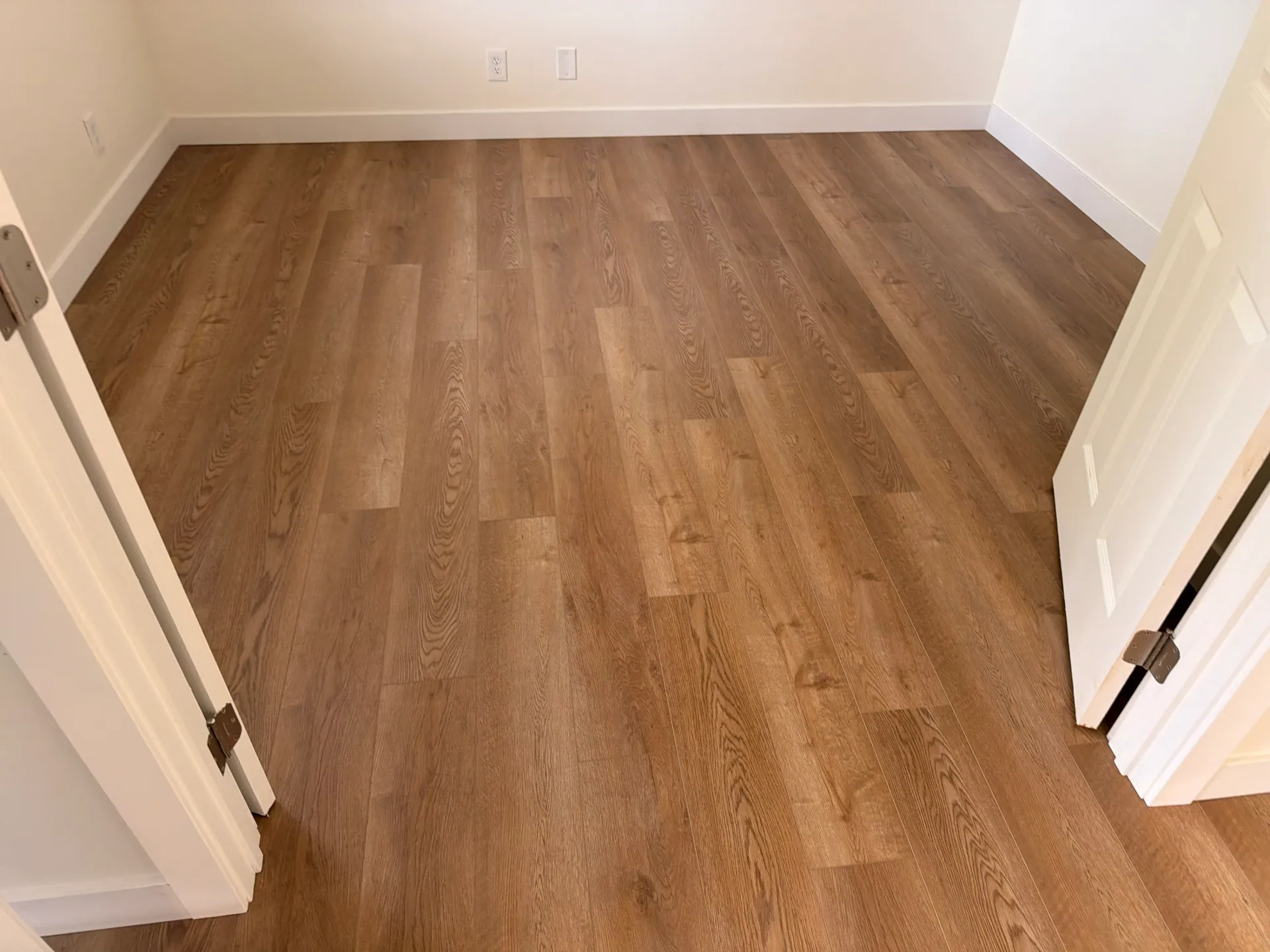
Low-maintenance is not the same as no-maintenance. How to clean vinyl plank and laminate properly, the common products and habits that damage them, and when a damaged plank should simply be replaced.
Luxury vinyl plank and laminate get sold as the easy floors, and they are. But easy is not the same as indestructible, and most of the tired-looking vinyl and laminate floors we are called out to replace were not worn out by traffic. They were worn out by the wrong mop, the wrong cleaner, a rubber-backed rug or a chair with bare metal feet. The good news is that looking after either floor properly takes less effort than looking after it badly. Here is what actually works, what to stop doing, and what to do when something goes wrong.
Neither floor has a finish you can renew. The top of a vinyl plank is a clear wear layer bonded on at the factory, and the top of a laminate plank is a hard decorative surface over a printed image. Everything that makes the floor look like wood lives in or under that top layer. When it is scratched through or dulled by the wrong product, there is no sanding it back the way you can with hardwood. The damaged plank is replaced.
So care for these floors is really about one thing: keeping the wear layer intact for as long as possible. Grit, chemicals, heat and point loads are what wear it down. Water, for the most part, is not the enemy people assume it is, with one important exception for laminate covered below.
Sweep, dust-mop or vacuum often. Fine grit tracked in on shoes is abrasive, and a floor walked on with grit underfoot is being lightly sanded all day. Use the hard-floor setting on the vacuum, or switch off the beater bar - a spinning brush roll full of grit is not something you want on a wear layer.
Damp-mop when the floor actually needs it rather than on a schedule. A microfiber mop, a cleaner made for vinyl or laminate floors (or just warm water for light cleaning), and a mop wrung out so it leaves a film of moisture that dries in a minute or two rather than a puddle. Spray the cleaner onto the mop head rather than onto the floor, which keeps the amount of liquid honest.
Wipe spills when they happen. On vinyl that is housekeeping; on laminate it matters more, for reasons in the next section.
And put a proper mat at every exterior door. In central Indiana winters, road salt and grit come in on every pair of boots, and a mat stops most of it before it reaches the floor.
Luxury vinyl plank is waterproof through the plank. A wet mop will not hurt the plank itself, though standing water can still find its way through the joints and onto the subfloor, so a damp mop is still the right habit.
Laminate is different, including the waterproof lines. Its core is a wood-based fiberboard, and the water protection lives in the surface and the sealed joints, rated to hold out water for a stated number of hours rather than indefinitely. That is plenty for a spill wiped up in a reasonable time. It is not a license to flood the floor with a wet mop every week. What the waterproof label actually promises covers the difference in detail, and your product's care guide will spell out its own limits.
Steam mops. Most vinyl and laminate manufacturers tell you not to use them, and the reasons are sound: steam drives hot moisture into the joints, and on vinyl the heat itself can affect the plank and the locking edges. It is the single most common way we see a floor damaged by someone trying to look after it.
Polishes, waxes and anything sold as a mop-and-shine. These floors do not need a coating and do not bond with one. The product sits on top, builds up in layers, traps dirt and leaves a cloudy, streaky film that no amount of ordinary cleaning removes.
Oil soaps, dish soap and all-purpose sprays. They leave residue, and residue is what makes a floor look dull and feel sticky however often it is cleaned. Abrasive powders and scouring pads scratch the wear layer outright. Many manufacturers also advise against vinegar and ammonia-based cleaners, so check your care guide before reaching for either.
Rubber- and latex-backed rugs and mats. This one surprises people. The backing on many rugs can react with vinyl and leave a yellow or brown stain the exact shape of the mat that does not come out. Use mats labelled as safe for vinyl floors, or a woven rug on a non-staining rug pad.
If your floor already has a dull film on it from years of the wrong product, a cleaner made to strip residue from vinyl or laminate is the fix, not more of the same product.
Vinyl is softer than laminate, and a heavy piece of furniture on narrow legs will press a dent into it over time. Wide felt pads or furniture cups spread the load and prevent both dents and drag scratches. Check the felts every few months, because a felt pad that has picked up grit becomes sandpaper.
Office chairs are the worst offenders. Hard plastic casters rolling in the same small area wear through a wear layer faster than anything else in the house. Soft casters made for hard floors, or a chair mat that is not rubber-backed, solve it.
When appliances or heavy furniture move, lift or slide them on protective panels rather than dragging. A refrigerator rolled across vinyl on its own small wheels can leave a track.
Strong direct sun is worth managing too. Years of it can fade a floor unevenly, and in a room with a lot of south- or west-facing glass the heat on a floating floor can make it move more than it should. Blinds or UV-filtering window film in the sunniest rooms help with both.
Pet accidents should be cleaned up promptly with a cleaner that is safe for the floor. The plank will survive; the concern is liquid that sits long enough to work into the seams and reach the subfloor, where odor becomes a much harder problem. Keeping nails trimmed does more for the wear layer than any product. Flooring for pets and kids goes further on what holds up in a busy house.
If a house is going to sit empty through a winter or summer, do not shut the heating or cooling off entirely. Floating floors are installed to live within a temperature range the manufacturer specifies, and a house left to freeze or bake can open gaps or push planks up at the edges. The care guide gives the range.
A light surface scuff on vinyl will often come out with a soft cloth and the floor's own cleaner. A scratch that catches a fingernail is through the wear layer and will not polish out. Neither will a burn, a deep gouge or a chipped laminate edge.
That is the upside of a plank floor. A damaged plank can usually be replaced on its own, without redoing the room, as long as a matching plank is available. This is why we suggest keeping a box of spares from the original install somewhere dry in the house: a product line can be discontinued, and a plank from a different run rarely matches.
If an area is lifting, peaking at a doorway or separating at the joints, that is not a cleaning problem. It usually points to something underneath, such as moisture, an uneven subfloor or a floor pinned where it needs to move. Those are worth having looked at before they spread.
If you are in Indianapolis or the surrounding counties and have a floor that has gone past what cleaning can fix, book a free consultation. We will tell you honestly whether the room needs a new floor, and what it should be.
Factory-direct pricing across Indianapolis, Carmel, Fishers, and the surrounding metro. Quick installs of upper-end USA products - most projects wrap in 1 to 2 weeks, backed by a 1-year labor warranty plus the manufacturer's lifetime warranty - up to a 50-year hard surface lifespan.