
HM
himanshu malik
Greater Indianapolis
"Great flooring company to work with. I have worked with them on their tech infra. Chase is very professional in their dealings."
Google Review

The floor is where dust, dander and pollen end up. How hard floors and carpet handle it differently, what makes a floor easy to keep clean, and what to ask about new-floor smell.
Once the furnace comes on in the fall, the house is closed up, the air is moving through the ducts again, and whatever dust and dander is in the house goes round with it. For anyone with allergies, that is when the floor starts to matter. Flooring will not cure allergies, and anyone with asthma or serious allergies should take their doctor's advice first. But the floor is where dust, pet dander and pollen settle, and the type of floor changes how easily it can be cleaned out of the house. Here is how the options compare.
Hard floors do not hold dust. It sits on the surface, where a vacuum or a dry microfiber mop can pick it up completely. The trade-off is that dust on a hard floor is easily stirred back into the air by footsteps and moving air until it is cleaned up.
Carpet holds dust down in the pile, where it is less likely to be kicked up by walking but also harder to get out. Over years, carpet and the pad beneath it collect a lot of material that a vacuum never fully removes, and pet dander in particular works its way deep into the fibers.
So the honest answer is that a hard floor that is cleaned often is usually the easiest floor to keep low on dust, and a carpet that is not vacuumed well can hold more than people expect. Which one suits your house depends as much on how it will be cleaned as on the material.
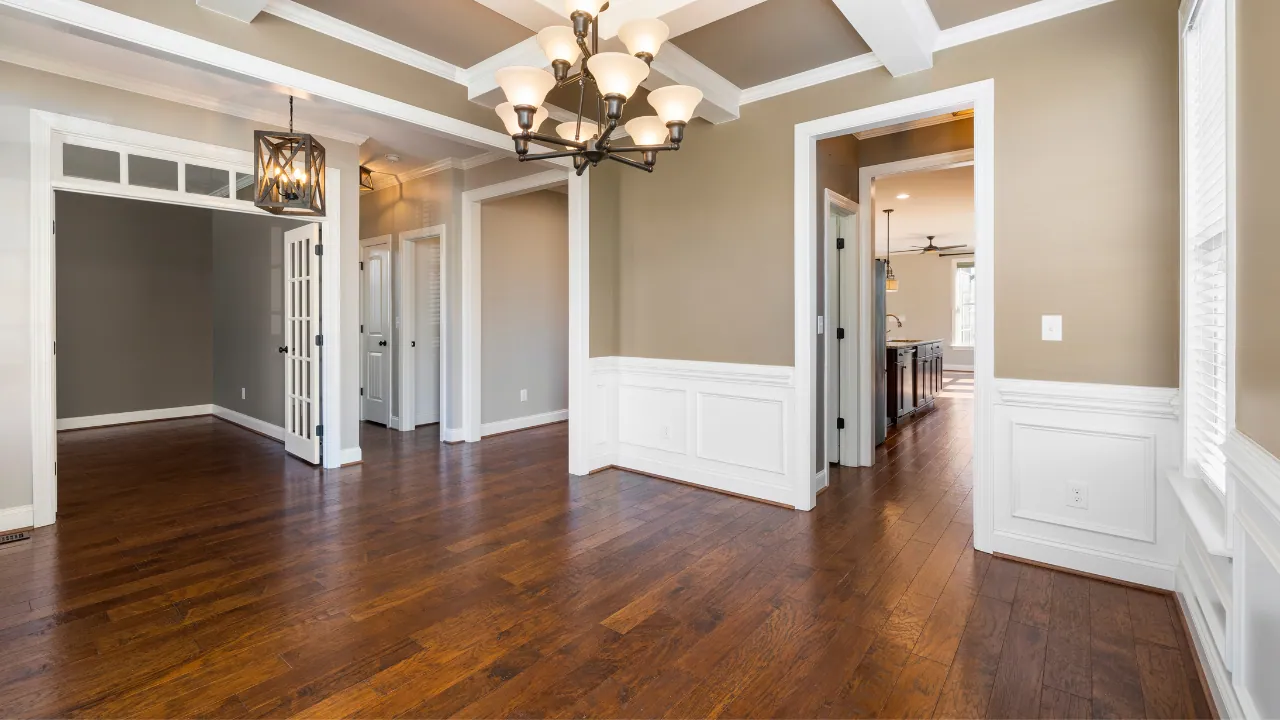
Luxury vinyl plank, waterproof laminate and hardwood all give a smooth surface that is easy to dry-mop or vacuum. Within any of them, a few details make a difference.
Look at the edges of the planks. Many wood-look floors have a bevel, a small V-groove where two planks meet. A deep bevel looks more like real wood but gives dust and pet hair a channel to collect in. A micro-bevel or square edge is easier to keep clean.
Texture matters too. Deeply wire-brushed and hand-scraped surfaces hide scratches well, and they also hold fine dust in the texture. A lightly textured floor is easier to wipe clean. Tile is easy to clean on the surface, but grout lines collect dirt and need sealing and occasional scrubbing.
Whatever the floor, the cleaning method matters more than the product: a vacuum with a hard-floor setting and good filtration, or a dry microfiber mop, picks dust up rather than pushing it around. How to clean luxury vinyl plank and laminate covers what to use.
Plenty of people with allergies still want something soft in the bedrooms. That can work, with the right choices.
A lower, tighter pile is easier to vacuum thoroughly than a deep, loose shag, because there is less room for dust to settle out of reach. Regular vacuuming with a well-filtered vacuum matters more for carpet than for any other floor. And if the carpet you have has been down for many years, replacing it removes not just the carpet but the old pad, which holds years of dust that never comes out. Carpet installation in Indianapolis covers fiber and pile types.
Another approach is a hard floor with washable area rugs. A rug that can be taken outside to shake or put through the wash gives softness underfoot without a wall-to-wall surface that stays in place for a decade.
Pet dander is one of the most common reasons people move from carpet to a hard floor. On a hard floor, hair and dander collect at the edges of the room and under furniture where they can be vacuumed up. In carpet they work into the fibers.
A hard floor for a house with pets also needs to handle claws and accidents, which is where scratch-resistant, waterproof floors earn their place. The best flooring for pets and kids compares the options.
Most new flooring has some smell for a short time after installation, from the product itself, adhesives or finishes. For people sensitive to odors, it is worth asking about it before choosing.
Many flooring products are tested and certified for indoor air quality by independent programs. FloorScore is a common certification for hard-surface flooring, and the Carpet and Rug Institute's Green Label Plus program covers carpet and adhesives. Ask whether the product you are looking at carries one, and where adhesive is used, ask about low-VOC options. Floating floors that click together use no adhesive at all.
After installation, ventilate the room for the first few days: open windows if the weather allows and run the fan on the furnace.
Dampness is its own allergy issue. Carpet over a basement slab that takes on moisture can grow mold underneath where nobody sees it, and that is one of the worst combinations for someone with allergies.
In basements and other below-grade rooms, a waterproof floor over a properly tested and prepared slab is usually the better choice. The best waterproof flooring for Indianapolis basements covers what we check and what goes down.
Tearing out old carpet and pad releases everything it has collected over the years, so removal is the dustiest part of the job. If someone in the house has allergies, it helps to plan for it: keep them out of the house during tear-out if possible, close off the room, and change the furnace filter once the job is done.
Pulling up and hauling away the old floor is included in our quotes, so it is not left sitting in the garage. What happens during a flooring installation explains the day step by step.
At the free in-home consultation we can bring samples with different edges and textures, talk about which rooms should be hard floors and which might stay soft, and look at any basement or slab areas.
We serve Greenwood, Indianapolis and the surrounding counties. Book a consultation and let us know if allergies are part of the reason you are replacing the floor.
Factory-direct pricing across Indianapolis, Carmel, Fishers, and the surrounding metro. Quick installs of upper-end USA products - most projects wrap in 1 to 2 weeks, backed by a 1-year labor warranty plus the manufacturer's lifetime warranty - up to a 50-year hard surface lifespan.