
HK
Haleigh Kessler
Greater Indianapolis
"My floors look so amazing! Beautiful craftsmanship. They did my entire upstairs in one day. Very professional and I am so happy with the results."
Google Review
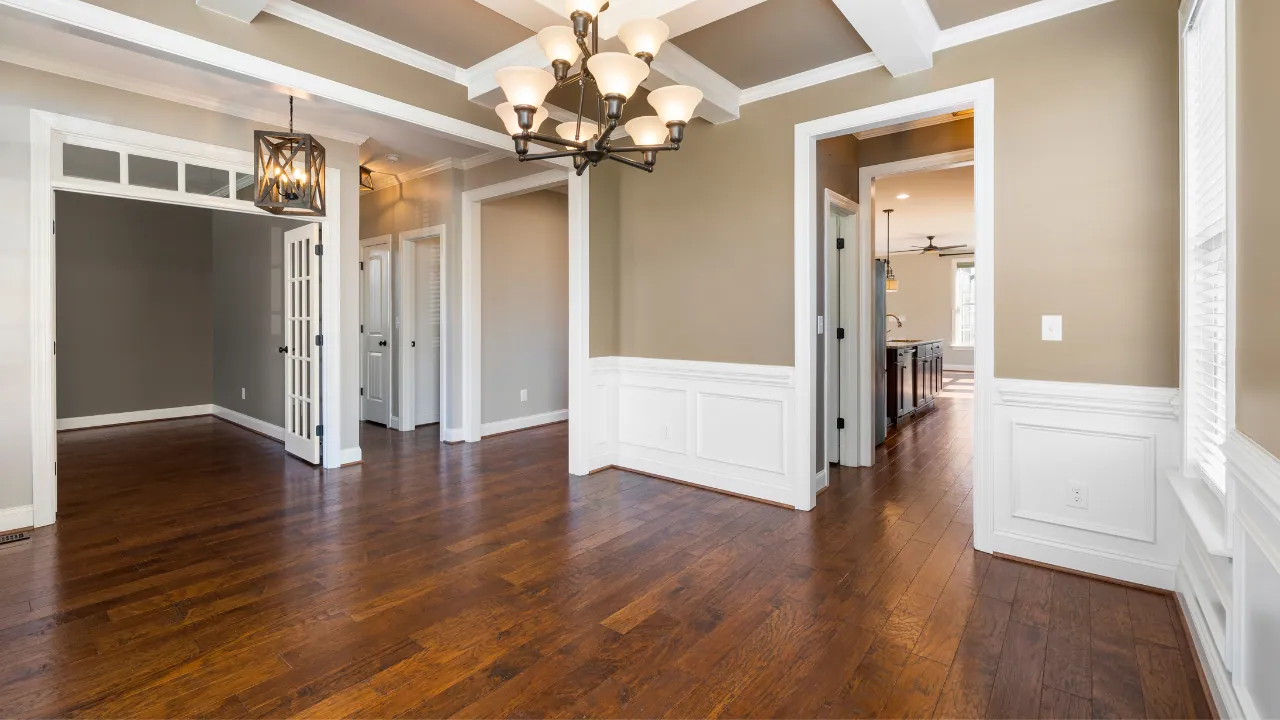
Humid summers, dry winters, and a below-grade basement all pull on your floor differently. Here is what holds up in an Indiana home.
The best flooring for Indiana homes is not one product - it is the right product for each room, chosen with the state's climate in mind. Central Indiana runs humid in summer and dry once the furnace kicks on, and that swing makes wood expand and contract all year. A finished basement adds slab moisture on top of that. Get the match right and your floor sits tight and quiet for decades; get it wrong and you see gaps in January and cupping in July. Here is how to think about it.
Wood is hygroscopic - it takes on moisture from humid summer air and gives it back when winter heating dries the house out. That is normal and every wood floor moves a little. The problems start when the swing is extreme or the wrong product goes in the wrong place: solid hardwood over a damp slab, or a floor installed without letting it acclimate to the home first.
The fix is partly product choice and partly installation. We measure subfloor moisture before any floor goes down and let materials acclimate to your home's conditions, so the floor settles into the same environment it will live in.
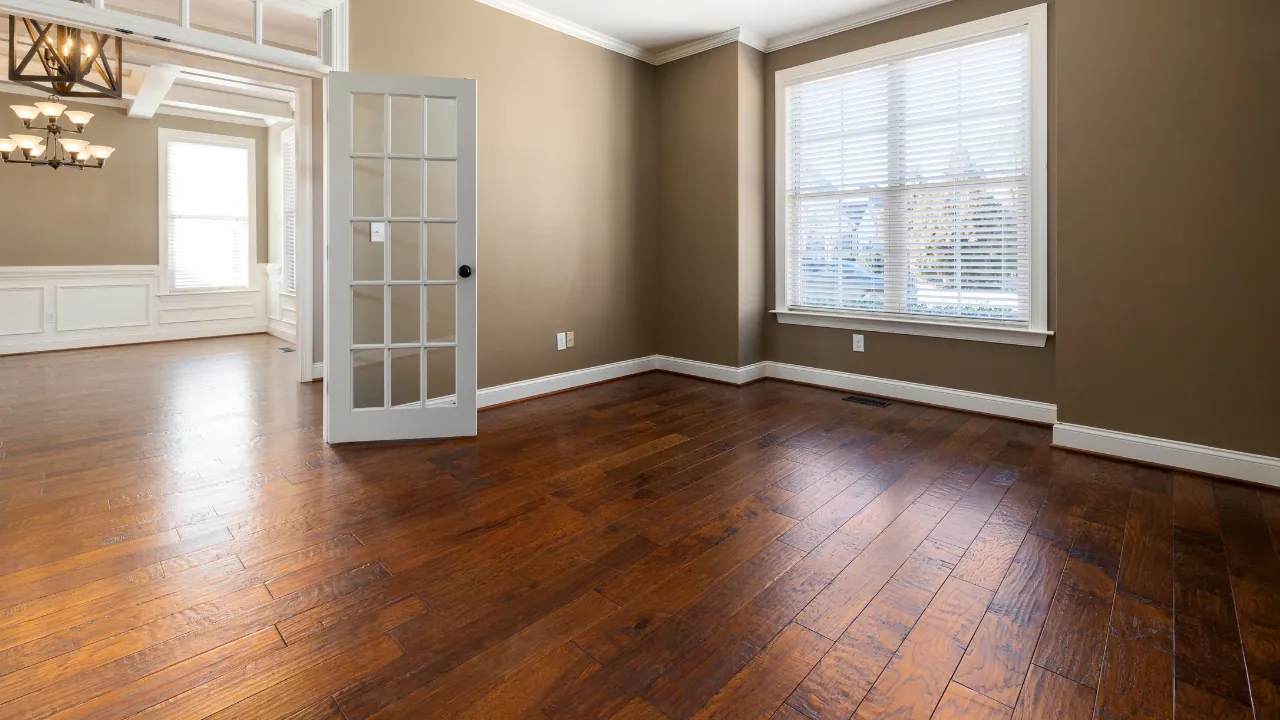
Above grade, in rooms where spills get wiped up rather than left standing, solid hardwood is the premium choice and ages beautifully. If the space sits over a slab, near a lot of glass, or on a radiant-heat system, engineered hardwood is the smarter call - its plywood core stays stable through the seasonal swing where a solid plank might move.
Both give you real wood underfoot. The difference is how much seasonal stress the room puts on it.
Anywhere water shows up - kitchens, bathrooms, laundry rooms, the mudroom that catches every Indiana winter - a waterproof floor is the right answer. Luxury vinyl plank is the default: 100% waterproof, scratch-resistant, and warm-looking. Waterproof laminate is the tougher-wearing cousin for high-traffic hallways. Neither cares about the humidity swing that stresses wood.
Below grade, moisture is a question of when, not if, so solid hardwood is off the table. Engineered hardwood or luxury vinyl plank installed over a moisture-tested, leveled slab handles the environment and still looks like a finished living space rather than a utility room. The slab reading and prep matter as much as the product here.
Carpet drops a bedroom several degrees in winter and soaks up household noise, which is exactly what you want in a room you sleep in. On a good pad it is the most comfortable floor in the house through an Indiana January. Match the floor to how each room is used and the seasons take care of themselves.
Factory-direct pricing across Indianapolis, Carmel, Fishers, and the surrounding metro. Quick installs of upper-end USA products - most projects wrap in 1 to 2 weeks, backed by a 1-year labor warranty plus the manufacturer's lifetime warranty - up to a 50-year hard surface lifespan.