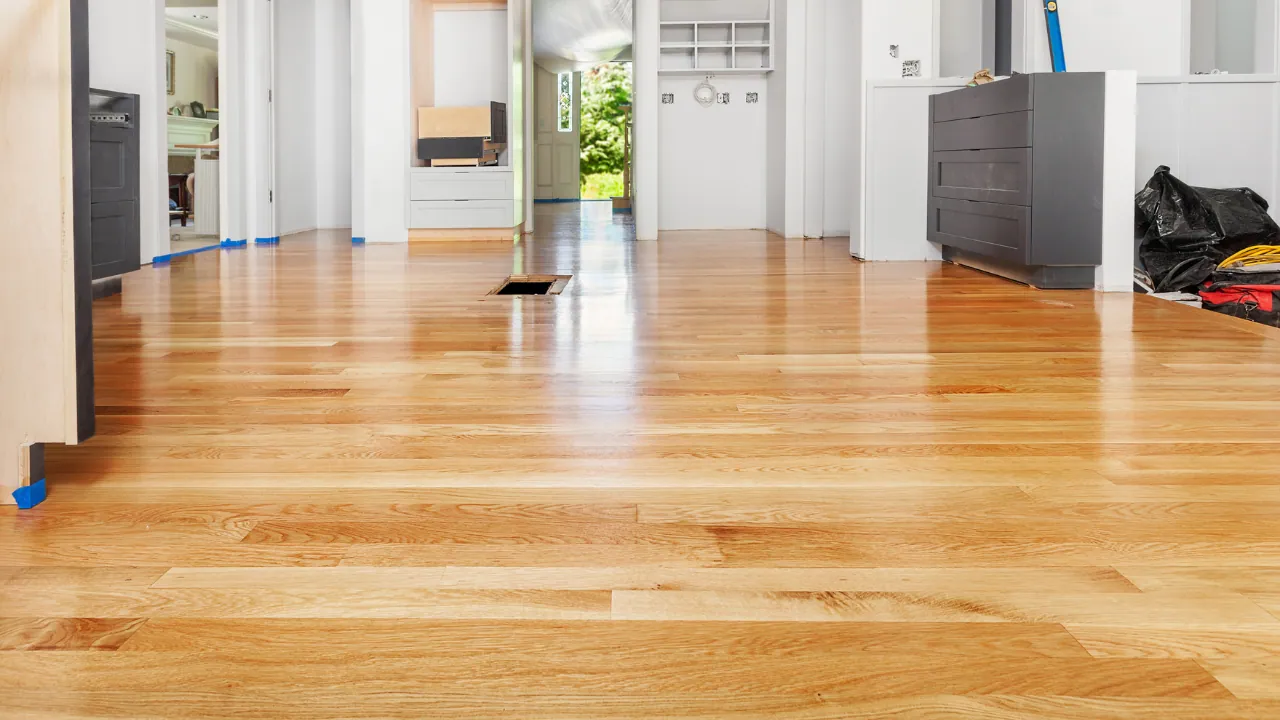
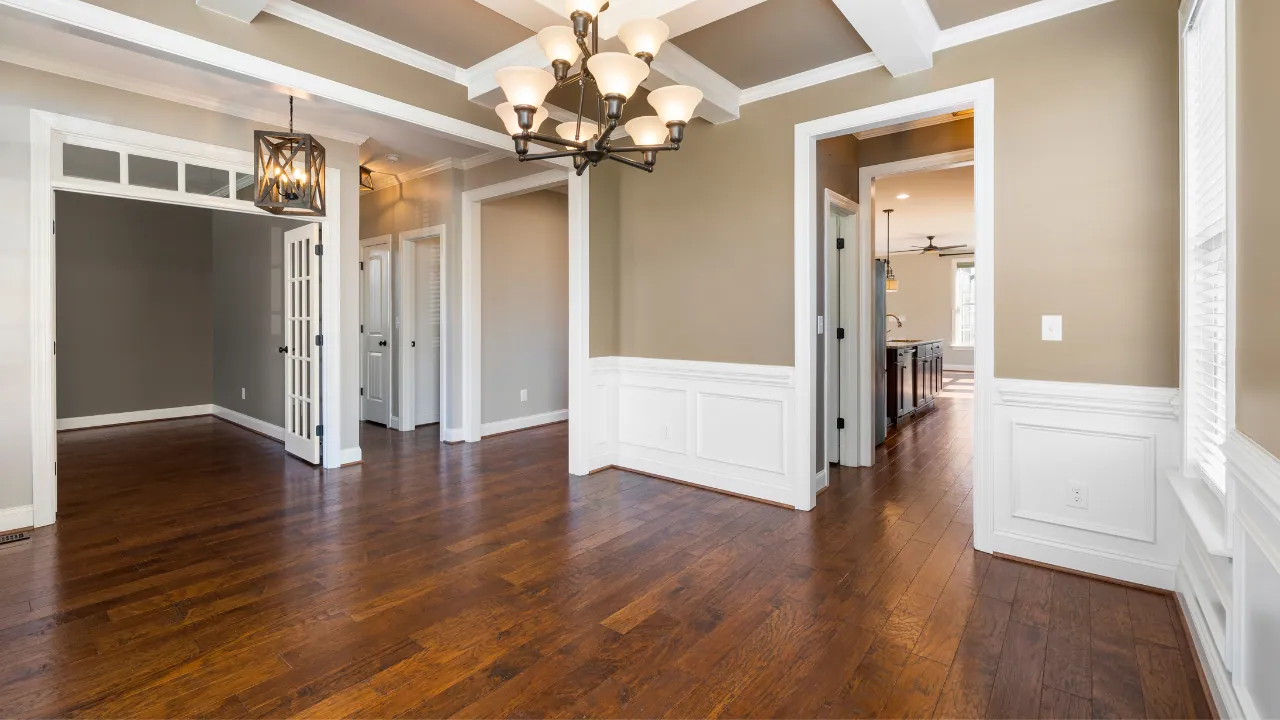
"My floors look so amazing! Beautiful craftsmanship. They did my entire upstairs in one day. Very professional and I am so happy with the results."
Engineered Hardwood: Real Wood That Handles Indiana
People hear "engineered" and think compromise. It is real hardwood on top of a core built to stop the movement that opens gaps in solid wood.
Engineered hardwood gets dismissed as the cheaper option, and that is a misunderstanding of what it is. The surface is real wood — the same species, the same finish, indistinguishable once installed. What differs is the core underneath, and in central Indiana that core is doing something genuinely useful.
What it actually is
A layer of real hardwood bonded to a core of cross-laminated plywood or a similar engineered material. The wear layer on top is the wood you see and walk on.
The cross-lamination is the whole trick. Each layer of the core runs perpendicular to the one below it, so when one layer wants to expand in a direction, the layers either side resist it. The result is a board that moves far less with humidity than a solid plank of the same wood.
Why that matters here specifically
Indiana asks a lot of wood. Summers are humid, winters are dry once the heating is on, and the difference between those two states is where solid hardwood shows its limits — gaps opening at the seams in January, tightness and occasional cupping in August.
Engineered construction absorbs most of that swing. The floor still moves, because all wood does, but it moves less and the seasonal gapping is correspondingly less visible.
It also opens up rooms solid wood cannot go in. Below-grade spaces and slabs pass moisture vapour upward, and solid hardwood over either is not recommended. Engineered handles both, which is why it is what we install in basements and slab-on-grade areas.

The wear layer is the specification that matters
Not all engineered hardwood is equal, and the number that separates them is the thickness of that real-wood top layer.
A thick wear layer behaves much like solid wood and can be sanded and refinished, sometimes more than once across its life. A thin one cannot be sanded at all — attempting it cuts through the veneer and exposes the core, which cannot be repaired.
This is the question to ask before anything about brand or colour. It determines whether the floor is something you keep for decades or a wear item you eventually replace, and it is the specification most likely to be quietly downgraded in a cheap quote.
How it compares on cost
Entry-level engineered undercuts solid hardwood meaningfully. High-end engineered with a thick wear layer costs about what solid does, and buys you the stability instead of a saving.
Which is the honest framing: engineered is not automatically cheaper. It is a different construction that solves a specific problem, and you can spend as much or as little on it as you like.
Installation options it opens up
Solid hardwood is nailed down, which requires a wood subfloor. Engineered can be nailed, glued or in some products floated, which is what makes slab installation possible.
A floating engineered floor also tolerates minor subfloor imperfection better than a nailed one, though it still needs a properly flat substrate. The installation method affects how the floor sounds and feels underfoot, so it is worth discussing rather than leaving to whatever is quickest.
How we would advise
If the room is above grade on a wood subfloor and you want a floor for the next thirty years, solid hardwood is still an excellent answer.
For a basement, a slab, a room with underfloor heating, or anywhere the seasonal humidity swing bothers you, engineered is the better construction — and with a thick wear layer you give up very little in exchange.
Frequently asked questions
- Is engineered hardwood real wood?
- Yes. The surface layer is real hardwood of whatever species you choose, and once installed it is indistinguishable from solid. What differs is the core underneath, which is built for stability rather than for looks.
- Can engineered hardwood be refinished?
- It depends entirely on the wear layer thickness. A thick wear layer can be sanded and refinished, sometimes more than once. A thin one cannot be sanded at all, and attempting it cuts through to the core. Check the number before you buy.
- Can I put engineered hardwood in a basement?
- Yes, and it is one of the main reasons the product exists. Below-grade spaces and concrete slabs pass moisture vapour upward, which solid hardwood handles badly. Engineered construction is designed for it, with a moisture reading beforehand to confirm what barrier is needed.
- Is engineered cheaper than solid hardwood?
- Entry-level engineered is meaningfully cheaper. High-end engineered with a thick wear layer costs roughly what solid does. It is better understood as a different construction than as a budget alternative.
Explore the pages in this guide
Book a free in-home design consultation.
Factory-direct pricing across Indianapolis, Carmel, Fishers, and the surrounding metro. Quick installs of upper-end USA products - most projects wrap in 1 to 2 weeks, backed by a 1-year labor warranty plus the manufacturer's lifetime warranty - up to a 50-year hard surface lifespan.