Skip to content
Save 50% on Flooring
Serving Central Indiana Call (317) 721-8022
TFPros - Transitional Flooring Professionals
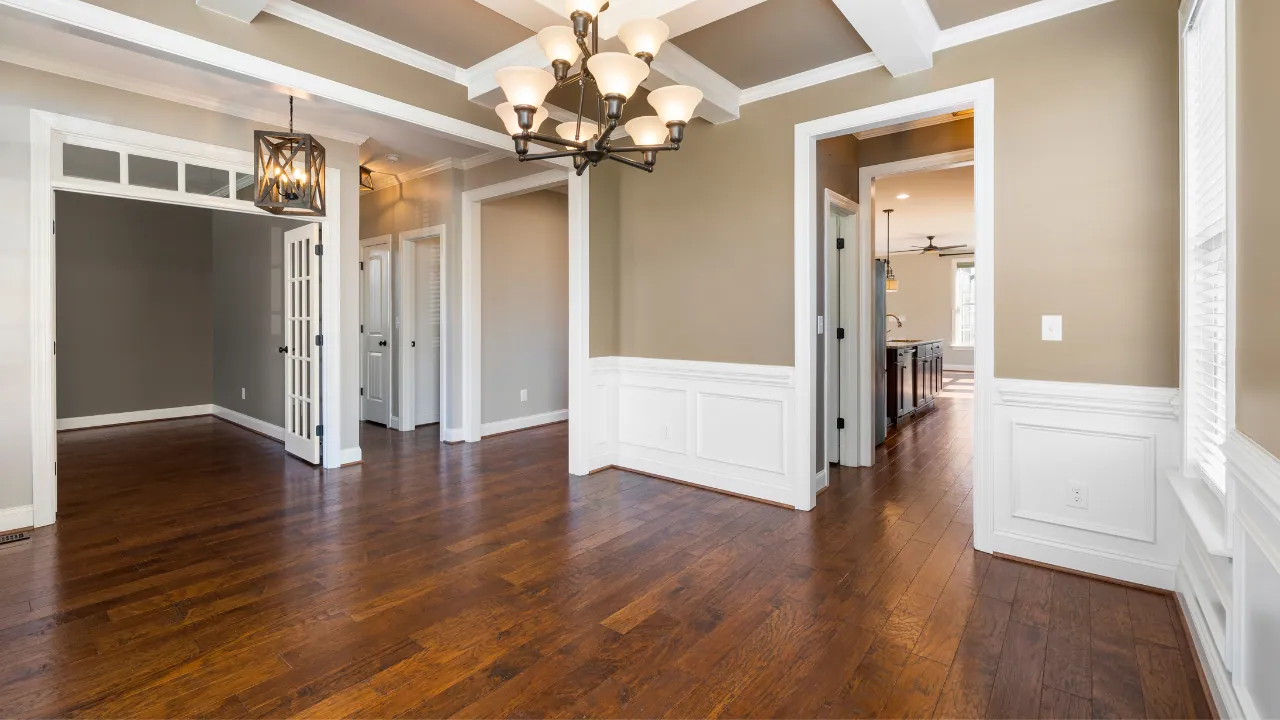
Wide-plank hardwood flooring running through an open living space
Local

Flooring in Columbus, Indiana: Matching a Floor to the Architecture

A town with seven National Historic Landmarks chooses floors differently. Mid-century modern, historic downtown, and newer builds - three different problems.

· 7 min read

Columbus is unusual, and anyone who lives there knows it. A small Indiana city with seven National Historic Landmarks and a modernist architectural legacy that people travel to see, sitting alongside a downtown historic district built between the 1850s and the 1930s. That mix shows up in flooring conversations more than it does anywhere else we work: people here tend to arrive with a view about the building, not just about the room. Here is how the three kinds of Columbus house tend to go.

The mid-century modern houses

The architectural houses in and around Columbus have a particular set of constraints, and they are the opposite of what most flooring advice assumes.

They tend to have long uninterrupted sight lines, large areas of glass, and low ceilings relative to the floor area. That combination means the floor is a much larger share of what you see than it would be in a conventional house, and it means the floor is in direct sun for hours at a time.

Two consequences. First, plank width and grain pattern matter more here - a busy, heavily varied floor fights a building designed around calm horizontal lines, and wide, quiet planks generally win. Second, sun is a real material consideration. Species and finishes change color under prolonged UV, some considerably, and a floor that sits half in sun and half in shade under a wall of glass can end up with a visible line across it in a few years. Choosing something photostable, or accepting and planning for the shift, is the honest way through it.

Radiant heat is more common in these houses than elsewhere in the region, and it rules some floors out. If there is radiant underfloor heating, say so early - it changes the material list before anything else does.

The downtown historic district

Houses from the 1850s to the 1930s bring the standard set of older-house realities, and they are all about what is underneath.

Subfloors in that era are frequently plank rather than sheet material, often laid diagonally, and they move. Levels change from room to room, sometimes by a surprising amount over a short run. There is usually at least one previous floor still in place under whatever is on top now, and occasionally three.

None of it is a problem, but all of it is work, and it is the part that decides whether the finished floor still looks right in ten years. Subfloor preparation is the honest read on what that involves.

Original hardwood is often worth keeping. If there is solid wood under a carpet and it has enough thickness left above the tongue, refinishing it is usually both cheaper and better than replacing it - refinish or replace walks through how to tell which one you are looking at. Where refinishing is the better answer we will say so rather than talk you into a replacement you do not need.

The newer builds

The subdivisions around the edges of town are the most straightforward work we do anywhere: flat sheet subfloors, predictable levels, open plans.

The usual choice is luxury vinyl plank through the main floor for durability and waterproofing, or engineered hardwood where real wood matters and the budget allows. Which one suits an Indiana house covers the comparison properly.

The one thing worth doing carefully in a new build is planning where the material changes. In an open plan there is often no wall to change at, and the transition ends up in the middle of a sight line. Deciding that on the plan is much better than deciding it with a box of trim in your hand.

How far south we come, and why that is a real question

Columbus is at the southern edge of what we cover, about forty-five minutes down I-65 from our base in Franklin Township, and it is a genuine service area rather than a page we put up to catch searches. Our Columbus service area page is the detail.

We would rather tell you no than take a job we cannot service properly, so it is worth asking directly if you are further south again. The reason it matters is not the drive on install day - it is what happens if you need us back. A company that is stretching to reach you is much less likely to come out for a small callback two years later, and a floor is a twenty-year purchase.

Between here and there we also cover Greenwood and Franklin, which sit on the same corridor.

What to have ready

If you have anything about the original build - drawings, a builder, a date - bring it. In Columbus that is more often available than elsewhere, and it genuinely helps.

Otherwise: pull back a corner of carpet in one room so we can see what is underneath, and note anywhere the floor feels soft, bouncy or noticeably out of level.

Then book a free in-home consultation and we will bring the samples to the house, which for a room with a lot of glass is the only way to judge color honestly.

Frequently asked questions

Do you actually serve Columbus, Indiana?
Yes. Columbus is roughly forty-five minutes south of our Franklin Township base on I-65 and is a full service area, including callbacks and warranty work rather than installation only. If you are further south than Columbus, ask us directly before assuming.
What flooring suits a mid-century modern house?
Wide, quiet planks with limited grain variation generally suit the long horizontal sight lines these houses were designed around. Sun is the other consideration: large areas of glass mean prolonged UV exposure, so ask about photostability, and mention radiant underfloor heating early because it rules some materials out.
Can the original hardwood in an older Columbus house be saved?
Often, yes. If there is solid wood with enough thickness left above the tongue, refinishing is usually cheaper and better than replacing it. Pull back a corner of carpet before you budget for a replacement - it is a five-minute check that can change the number substantially.
Ready when you are

Book a free in-home design consultation.

Factory-direct pricing across Indianapolis, Carmel, Fishers, and the surrounding metro. Quick installs of upper-end USA products - most projects wrap in 1 to 2 weeks, backed by a 1-year labor warranty plus the manufacturer's lifetime warranty - up to a 50-year hard surface lifespan.

Google Reviews

What homeowners say about working with TFPros.

AB
Addison Broady
Greater Indianapolis

"Very happy with the work of this company on my new hardwood floors. Everything looks seamless and the crew was wonderful to work with. Great guys! Would recommend and use them again for any of my flooring needs."

Google Review
AT
Addison Taylor
Greater Indianapolis

"I recently had these guys out to replace some old carpet. Was surprised by the friendliness of the employees as well as the quality of the service. Great crew that does a great job!"

Google Review
AC
Andrew Carr
Greater Indianapolis

"Good crew, fast and efficient. They handled glued laminate and carpet demolition, then installed LVP. Overall, satisfied with the results. I would use them again."

Google Review
JH
Jacob Harrison
Greater Indianapolis

"Great crew, they paid good attention to detail and delivered as promised."

Google Review
VK
Victoria Kingman
Greater Indianapolis

"I was impressed with the quality of the installation and the product. I was skeptical about the initial quote because it was so much lower, but surprised - no hidden costs. Love the result. Highly recommend."

Google Review