"I am beyond impressed with the carpet installation. The team arrived on time, worked efficiently, and paid attention to every detail. Seams are invisible, edges are perfect, and they left everything spotless. The quality of work exceeded expectations - highly recommend to anyone needing carpet laid."
Flooring Installation in Franklin, IN: Pre-War Houses, Post-War Ranches and What Each One Needs
A 1900 Queen Anne near the Artcraft and a 1998 build off US 31 are not the same flooring job. Franklin has both, and the difference is mostly under the floor.
Franklin is the Johnson County seat, half an hour south of us down I-65, and its housing is older than almost anywhere else we work. The blocks around the Martin Place historic district and the 1920s Artcraft Theatre are Italianate, Queen Anne and Craftsman houses from the 1880s through the 1920s, on stone and brick foundations with plank subfloors. Around them are the post-war ranches, and further out the 1990s-and-later subdivisions along US 31 and toward Whiteland. Each is a different job, and in the old ones the flooring is the easy part. This is what we do in each and what to expect.
The pre-war houses: the subfloor is the job
In a Franklin house built before about 1930, the floor system is a plank subfloor, often diagonal, nailed to full-dimension joists over a cellar or crawl space, with an original finish floor of narrow oak, maple or pine on top. A century of foot traffic, settling and a few renovations later, that system has moved. Rooms are out of square, floors slope toward the center of the house, and there are soft spots near exterior walls and around old plumbing.
None of that is a reason not to install new flooring. It is a reason the subfloor gets addressed first. We check every room for deflection and squeak, screw the plank down to the joists, replace rotted boards, and where the plank gaps are too wide or the surface too uneven for a floating floor, we sheet it with underlayment-grade plywood. That step is unglamorous, it is a real line on the quote, and skipping it is how a new floor in an old house clicks, separates and telegraphs within a year. Subfloor prep: the part of the job you never see covers it in detail.
Slope is a judgment call. A floor that has settled evenly over a hundred years is not going to be made level without structural work, and forcing a floating floor flat across a slope creates gaps at the walls. We flatten local dips and humps and let the floor follow the house.

Save the original floor, or cover it?
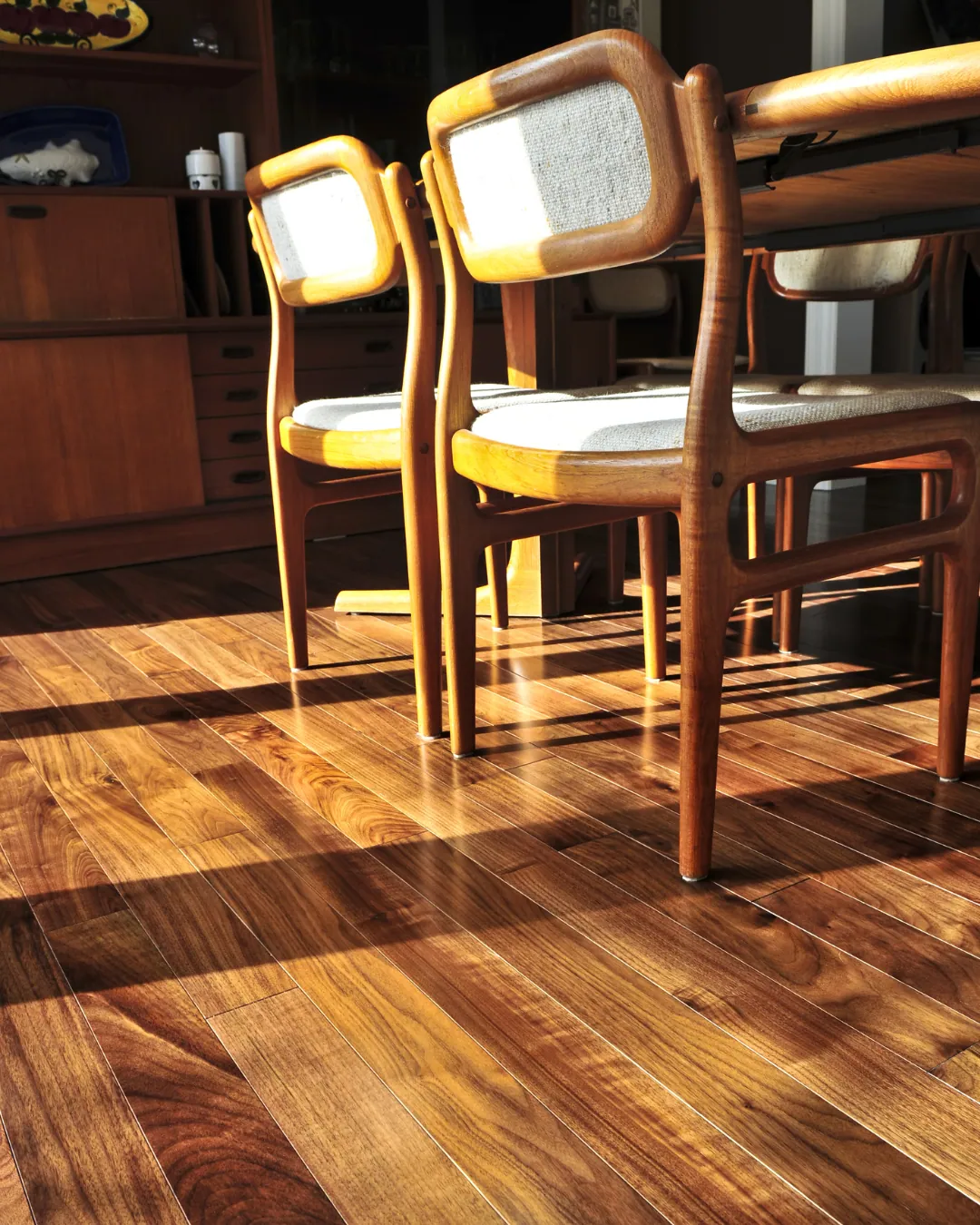
The best floor in most pre-war Franklin houses is already there, under carpet or later layers. Original quartersawn oak, heart pine and maple from that era are denser and more stable than almost anything sold today, and a sound one refinishes into the most valuable surface the house can have. Pull back a corner in a closet before deciding anything. Refinish or replace your hardwood explains how to read what you find.
Where the original is gone or too far worn, and in the kitchens and baths that were never wood, new flooring goes over the prepared subfloor. In these houses that is usually solid or engineered hardwood matched to what survives elsewhere, or a waterproof plank in the wet rooms. We undercut the tall original casings so the new floor runs beneath them, and we cut transitions to meet original thresholds rather than replacing trim that cannot be matched.
The post-war ranches
The 1950s-to-1970s ranches that ring the old core, off Jefferson Street, along King Street and out toward the fairgrounds, are the largest share of Franklin's housing and the most predictable job. Slab or crawl space, plywood or plank subfloor, oak strip in the living areas under decades of carpet, and layered sheet vinyl in the kitchen.
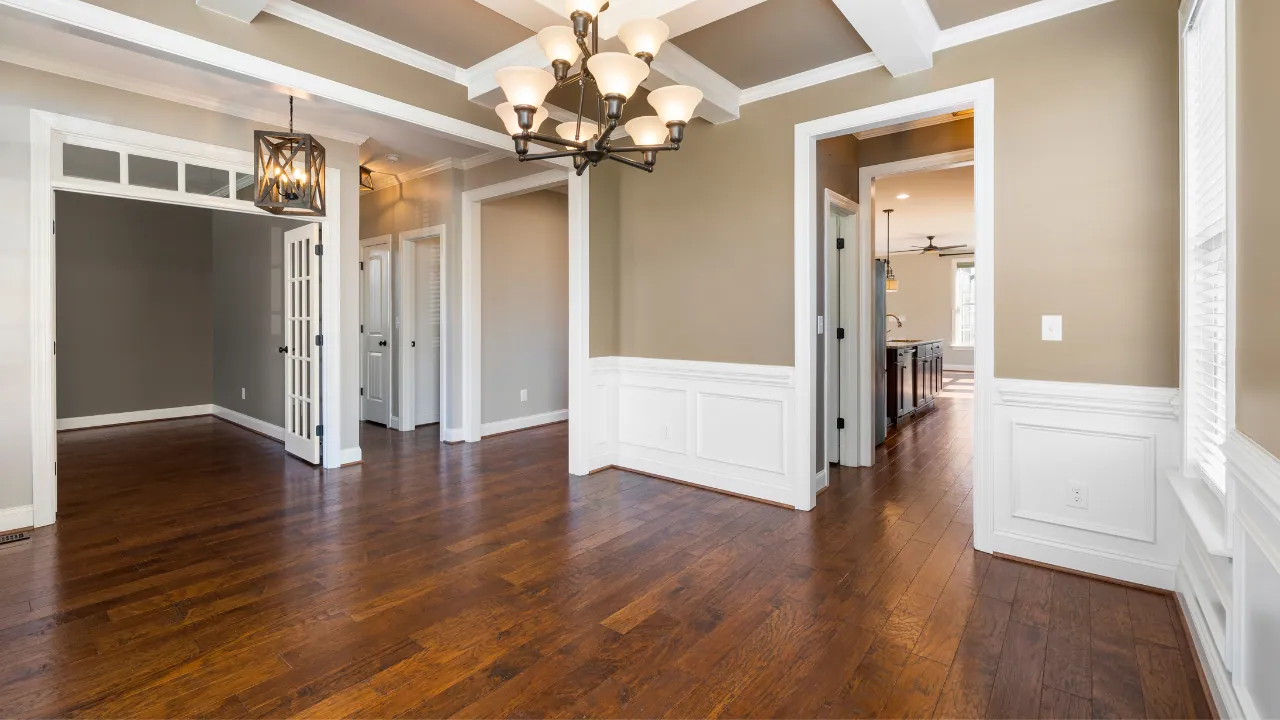
The usual project is one hard surface through the living areas and kitchen, replacing the carpet-to-vinyl line that dates these houses, with new carpet in the bedrooms. Waterproof laminate and luxury vinyl plank are the common main-floor choices; both float, which matters over a crawl space that may be pushing moisture up. Old sheet vinyl on a cutback adhesive stays down and gets floated over rather than ground off. LVP and laminate installation in Indianapolis covers the difference between the two.
The subdivisions along US 31
Franklin's newer housing, the 1990s-onward builds toward Whiteland and along the US 31 corridor, is the same job as the rest of the metro's production housing: flat plywood or slab, open main floor, builder-grade carpet and vinyl reaching the end of their life. One continuous LVP or laminate through the main floor and better carpet on a real pad in the bedrooms is the answer in almost every one. The best flooring for Indiana homes through every season covers how the humidity swing affects each product.
Carpet in Franklin
Bedrooms in every era of Franklin house still want carpet, and over a crawl space it is noticeably warmer and quieter than any hard surface. We install premium and designer lines on an upgraded 8 lb pad as standard, with furniture moving and old-carpet removal in the quote. In a pre-war house, carpet on the second floor also quiets a plank subfloor that would otherwise announce every step downstairs. Carpet installation in Indianapolis covers fiber, pile and pad.
What a Franklin job involves
It starts with a free in-home consultation, and in Franklin that visit matters more than most, because the subfloor decides the quote. We walk every room, check for deflection and moisture, look under a corner, and lay samples on your floor. The written quote lists the product, square footage, removal, subfloor work, transitions and stairs as separate lines, so a Franklin quote with real prep on it can be compared honestly against one that left it out. What drives flooring installation cost in central Indiana explains the lines.
Our own crew does the work from measure to trim, and every job carries a one-year labor warranty on top of the manufacturer's. We are based in Franklin Township on the southeast side of Indianapolis, which is not Franklin the city but is a straight run down I-65 to it, and we are in Franklin and Greenwood every week. Book a consultation here.
Frequently asked questions
- Can you install new flooring in a house built in the early 1900s?
- Yes, and we do it regularly around Franklin's historic district. The difference from a newer house is that the plank subfloor has to be checked, fastened and often sheeted with plywood before anything goes down, and the floor is allowed to follow the house's settled slope rather than being forced flat. That prep is a real line on the quote and it is what makes the new floor last.
- Should I refinish the original hardwood in my Franklin home or replace it?
- Refinish it if it is sound. Original oak, maple and heart pine from that era are denser and more stable than most new flooring, and a refinished original floor is the most valuable surface a pre-war house can have. Replace only where boards are missing, rotted or worn past the tongue, and match new wood into those rooms.
- What flooring works over a crawl space in an older home?
- Floating floors handle it best, because a crawl space that holds moisture pushes humidity up through the subfloor and will cup a nailed solid floor. Luxury vinyl plank and waterproof laminate over a vapor barrier are the usual answers, with carpet in bedrooms. Controlling the crawl-space moisture itself is the permanent fix.
Explore the pages in this guide
Book a free in-home design consultation.
Factory-direct pricing across Indianapolis, Carmel, Fishers, and the surrounding metro. Quick installs of upper-end USA products - most projects wrap in 1 to 2 weeks, backed by a 1-year labor warranty plus the manufacturer's lifetime warranty - up to a 50-year hard surface lifespan.