Skip to content
Save 50% on Flooring
Serving Central Indiana Call (317) 721-8022
TFPros - Transitional Flooring Professionals
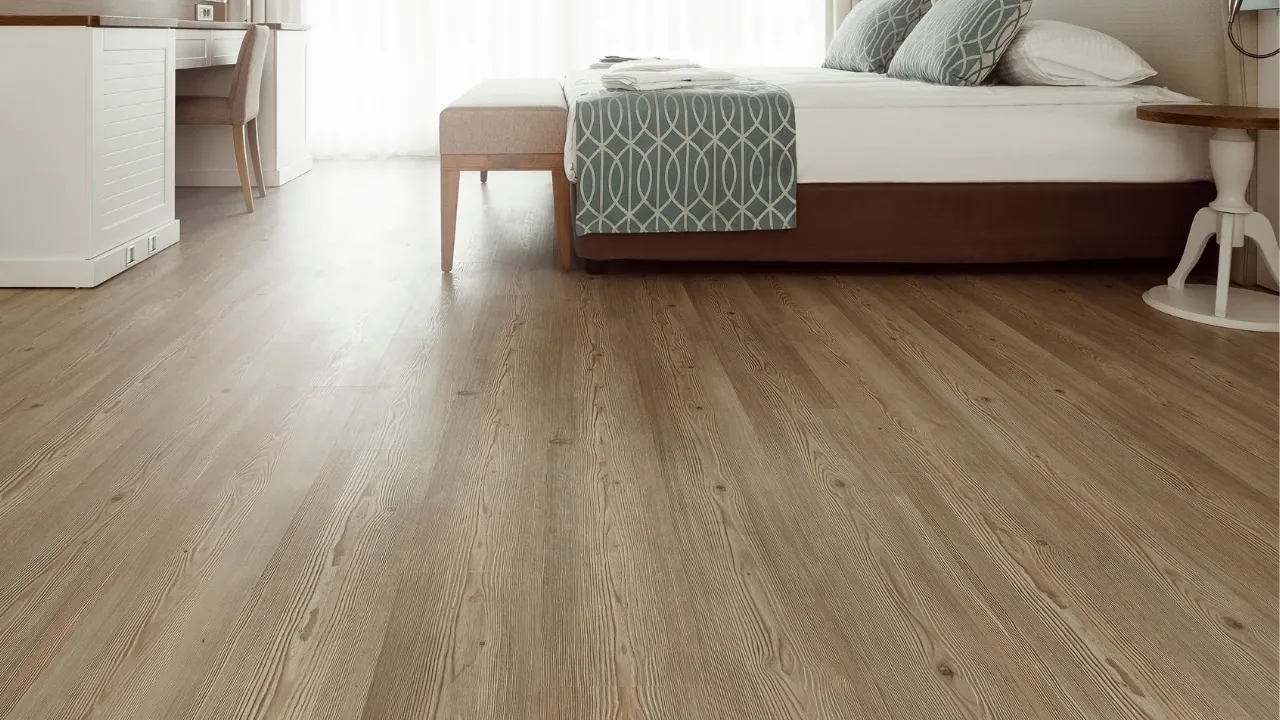
Pine-look plank flooring running under an upholstered bed and bench in a quiet bedroom
Buying Guides

Quiet Floors: Underlayment, Footstep Noise and Hard Floors Upstairs

Swapping upstairs carpet for a hard floor changes how the whole house sounds. What causes the hollow click and the footsteps overhead, what underlayment can and cannot do, and what condo rules to check first.

· 8 min read

The most common regret we hear after a hard floor goes in upstairs is not about how it looks. It is about how it sounds. Footsteps in the bedroom are suddenly audible in the kitchen, the dog's nails click down the hall, and a floor that looked perfect in the showroom sounds slightly hollow underfoot. None of that is inevitable, and most of it is decided before the first plank goes down. Here is where floor noise comes from, what underlayment actually does, and how to plan a quiet floor, particularly if you live in a condo or townhome with neighbors below.

Two different noises, two different fixes

People describe floor noise as one problem. It is really two, and they are solved differently.

The first is the sound in the room itself: the hollow, slightly clicky sound of shoes or claws on a hard surface, and the way a room with a hard floor echoes more than the same room did with carpet. That is about the floor's surface, what is directly under it, and how much soft material is left in the room.

The second is the sound that travels through the floor to the room below. Footsteps, a dropped toy, a chair pushed back. That is impact noise, and it moves through the structure of the house. It is the one that matters in a two-story home with bedrooms over the living area, and it is the one condo associations write rules about.

A product that improves one does not automatically improve the other, which is why it pays to know which one you are actually trying to solve.

How each floor behaves

Carpet on a good pad is the quietest floor there is, on both counts. It absorbs impact before it reaches the structure and it soaks up sound in the room. If a bedroom sits directly over a living room and quiet is the priority, carpet is still the honest answer, and it is why most houses keep it on bedroom floors.

Floating floors - click-together luxury vinyl plank and laminate - are the ones most likely to sound hollow, because they rest on the subfloor rather than being fixed to it. Any gap between the plank and the subfloor becomes a little drum. Laminate, with its harder surface, tends to be the more audible of the two. A quality underlayment and a flat subfloor make an enormous difference to both.

Nailed-down hardwood is fixed to the subfloor, so it does not have the floating-floor hollowness, and it sounds solid underfoot. It still carries footsteps to the room below more than carpet does, and it can squeak where the subfloor itself is loose.

Glue-down vinyl, bonded directly to the subfloor, is generally quieter underfoot than the same vinyl floated, because there is no air space for sound to rattle around in.

What underlayment does, and what it cannot do

Under a floating floor, the underlayment is a thin layer - foam, felt, cork or rubber, sometimes bonded to the back of the plank at the factory - that smooths out tiny irregularities, gives the floor a more solid feel and reduces sound. A good acoustic underlayment is one of the better-value upgrades on an upstairs install.

What underlayment cannot do is turn a hard floor into carpet. It softens and reduces impact noise; it does not remove it. Expectations set on that basis are the ones that end up met.

The other limit catches people out. Thicker and softer is not better. Most rigid-core vinyl and laminate is designed to sit on a thin, firm underlayment, and many planks with an attached pad are not meant to have anything else added beneath them. A thick soft pad lets the planks flex every time someone steps on a joint, and the locking edges eventually crack or separate. It can also void the product warranty. The right underlayment is the one the plank manufacturer approves for that product, not the thickest one on the shelf.

The subfloor is half of the answer

The hollow sound under a floating floor comes largely from low spots in the subfloor, where the plank bridges a dip instead of resting on something solid. Flattening the subfloor before the floor goes down is what removes it. It is also what stops joints from flexing and failing over time. Subfloor prep covers how that is done and why it is the part of the job you never see.

Squeaks are a subfloor problem too. They come from plywood or OSB moving against the joists or against loose fasteners. While the old floor is up, the subfloor can be screwed down tight to the framing, which deals with most squeaks at the source. Once a new floor is on top, that option is gone, so this is worth asking about before the install, not after.

Condos and townhomes: read the rules before you choose

If there is a home below yours - a condo downtown, a stacked townhome in Carmel, Fishers or Westfield, an apartment you own - check your association's rules before you pick a floor, not after it is installed.

Many associations require hard floors to meet a minimum sound rating, and some require board approval before any hard flooring goes in. The ratings you will see are usually IIC, which measures how well a floor assembly blocks impact noise, and STC, which measures airborne sound such as voices. The requirement is usually a minimum number for one or both.

Two things are worth knowing. First, those ratings belong to a tested assembly - the flooring, the underlayment and the structure underneath it together - rather than to a plank on its own, so ask the manufacturer for the tested result that matches your building type. Second, get the requirement in writing from the association and hand it to your installer at the start. Tearing out a finished floor because it does not meet a rule nobody checked is an expensive way to learn it existed.

Lawrence and the newer townhome developments around the north side are places this comes up regularly.

Small things that make a big difference

Area rugs, on a proper rug pad, are the most effective thing you can add after the fact. In a bedroom with a hard floor, a large rug under and around the bed takes care of most of the echo and a good part of the footstep noise to the room below.

Felt pads on chair and furniture legs stop the scrape of a chair being pulled out, which carries surprisingly well through a floor.

Soft furnishings count. A room that swapped carpet for a hard floor has lost a lot of absorption, and curtains, upholstered furniture and a fabric headboard put some of it back.

And think about which rooms actually need a hard floor. A common and sensible answer in two-story homes is hard flooring through the main level, hallway and bathrooms, with carpet kept in the bedrooms. Replacing builder-grade carpet walks through how Hamilton County families tend to split it.

Plan it at the measure

The time to talk about noise is at the in-home consultation, before a product is chosen. Tell us which rooms are over which, whether there is a neighbor below, and whether an association has rules. We will look at the subfloor, flag anything that will make a floating floor sound hollow, and recommend the floor and underlayment that fit the room rather than the one that looks best on a sample board.

If you are in Indianapolis, Carmel, Fishers or anywhere in the surrounding counties, book a free consultation and bring the association paperwork if you have it.

Frequently asked questions

What is the quietest type of flooring?
Carpet on a good pad is the quietest, both in the room and for noise carried to the room below. Among hard floors, nailed-down hardwood and glue-down vinyl tend to sound more solid underfoot than floating floors, and a floating vinyl or laminate floor on a quality acoustic underlayment over a flat subfloor is far quieter than one installed without them.
Why does my laminate or vinyl floor sound hollow?
Usually because the floor is floating over low spots in the subfloor, so the planks bridge small gaps instead of resting on something solid. The wrong underlayment, or none, makes it worse. Flattening the subfloor before installation and using the underlayment the manufacturer approves are what prevent it.
Can I add extra padding under vinyl plank to make it quieter?
Usually not. Most rigid-core vinyl and laminate is designed for a thin, firm underlayment, and planks with an attached pad often should not have anything added underneath. A thick soft pad lets the joints flex and eventually fail, and it can void the warranty. Use only the underlayment the plank manufacturer approves.
What do IIC and STC ratings mean for condo flooring?
IIC measures how well a floor-ceiling assembly reduces impact noise such as footsteps, and STC measures airborne sound such as voices. Many condo associations set a minimum for one or both before hard flooring can be installed. The rating applies to the whole assembly, so ask for tested results that match your building, and get the association's requirement in writing before choosing a floor.
Ready when you are

Book a free in-home design consultation.

Factory-direct pricing across Indianapolis, Carmel, Fishers, and the surrounding metro. Quick installs of upper-end USA products - most projects wrap in 1 to 2 weeks, backed by a 1-year labor warranty plus the manufacturer's lifetime warranty - up to a 50-year hard surface lifespan.

Google Reviews

What homeowners say about working with TFPros.

JC
Jennifer Childers
Greater Indianapolis

"I am beyond impressed with the carpet installation. The team arrived on time, worked efficiently, and paid attention to every detail. Seams are invisible, edges are perfect, and they left everything spotless. The quality of work exceeded expectations - highly recommend to anyone needing carpet laid."

Google Review
JM
Janna Marie
Greater Indianapolis

"Highly recommend! Julio was very professional and knowledgeable when he came out to give us an estimate. We chose the carpet we wanted and could not be happier with the service TFP provided. The installers were hard workers and very respectful of our home."

Google Review
AB
Addison Broady
Greater Indianapolis

"Very happy with the work of this company on my new hardwood floors. Everything looks seamless and the crew was wonderful to work with. Great guys! Would recommend and use them again for any of my flooring needs."

Google Review
AT
Addison Taylor
Greater Indianapolis

"I recently had these guys out to replace some old carpet. Was surprised by the friendliness of the employees as well as the quality of the service. Great crew that does a great job!"

Google Review
AC
Andrew Carr
Greater Indianapolis

"Good crew, fast and efficient. They handled glued laminate and carpet demolition, then installed LVP. Overall, satisfied with the results. I would use them again."

Google Review