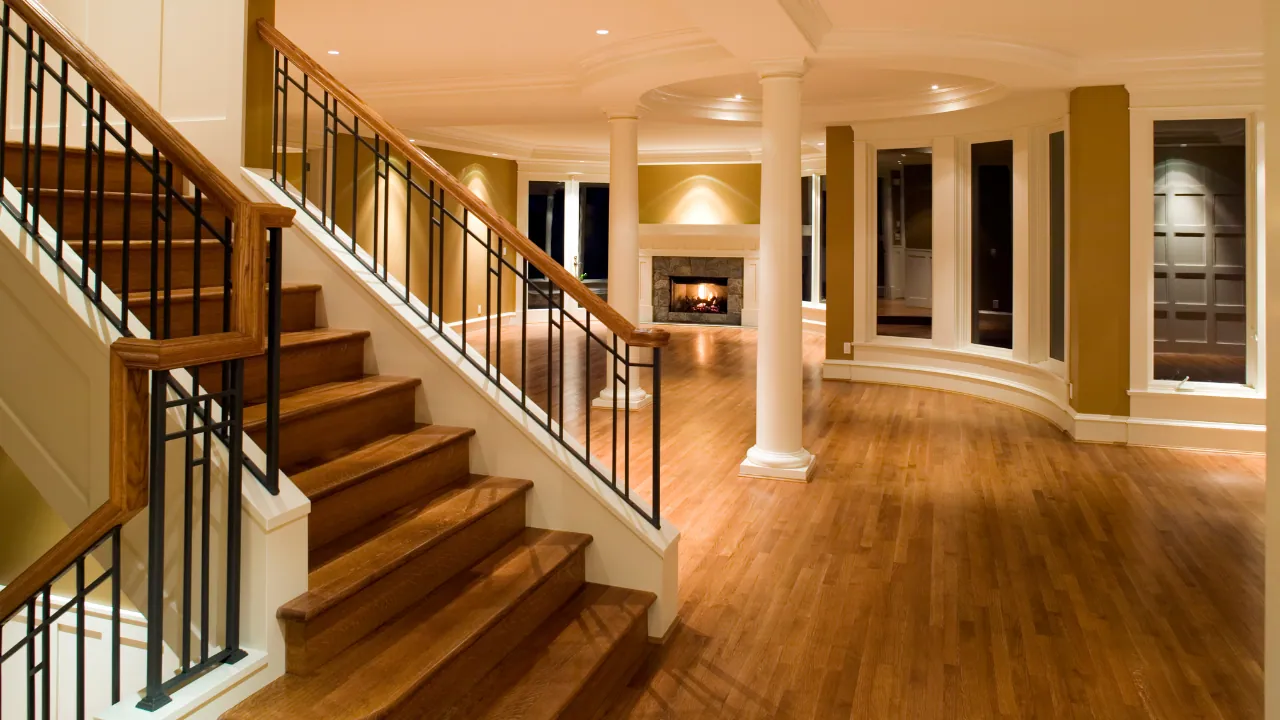
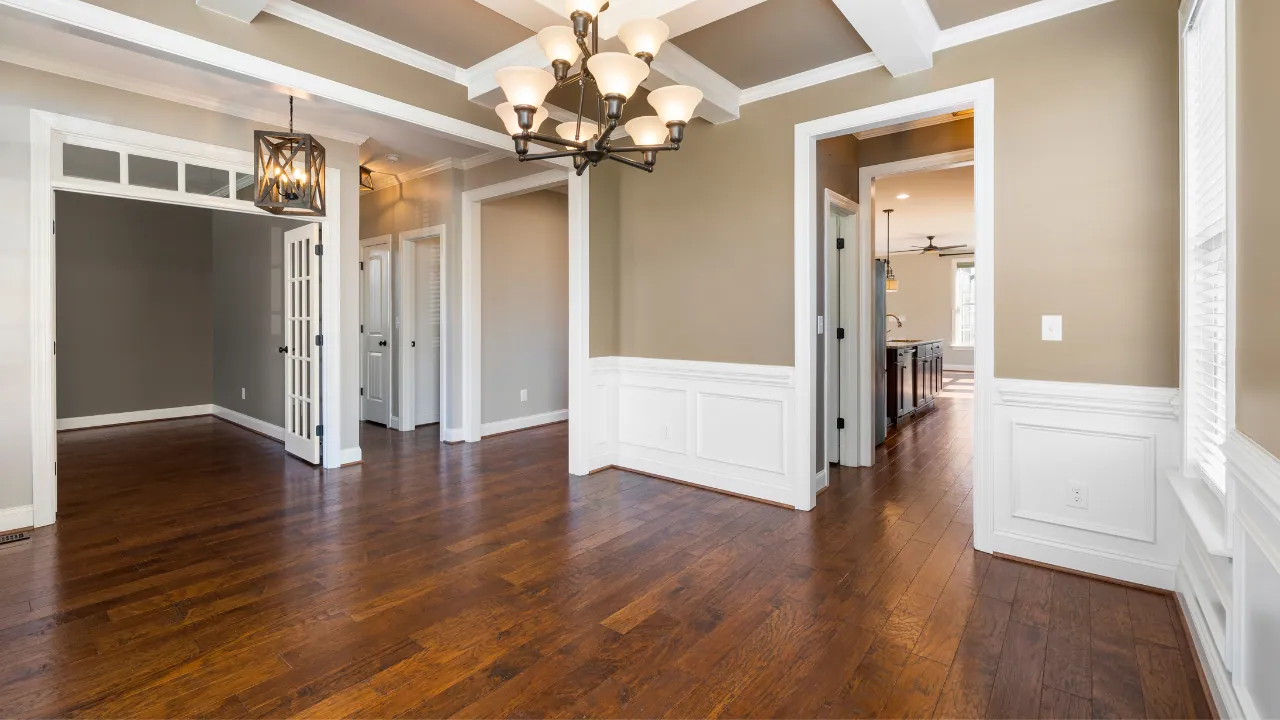
"Very happy with the work of this company on my new hardwood floors. Everything looks seamless and the crew was wonderful to work with. Great guys! Would recommend and use them again for any of my flooring needs."
Hardwood Stairs and Landings: What the Job Involves
Every tread is cut individually and nothing in a house is square. Why stairs are priced per tread, what is under the carpet, and how to decide before you commit.
Stairs come up in almost every flooring project, usually about two thirds of the way through, and usually as a surprise. The floor is chosen, the number is agreed, and then somebody looks at the carpeted staircase in the middle of it. Stairs are their own job with their own pricing and their own decisions, and the more of that you know up front the fewer surprises there are later.
Why stairs cost what they cost
A floor is a repeatable operation. Rows of plank get laid across an open area and the crew gets faster as they go.
A staircase is the opposite. Every tread is measured and cut to its own opening, because stringers are almost never perfectly parallel and the width frequently varies from top to bottom. Every riser is fitted individually. Every piece has to be scribed to walls that are not straight.
That is why stairs are priced per tread rather than by area, and why a fourteen-tread staircase can approach the cost of a whole room. It is not a markup - it is genuinely the most labor-intensive thing that happens on a flooring job.
It is also the most visible. A staircase sits at eye level in the middle of a house, usually in the entry, and every joint on it gets looked at from four feet away. This is not the part to give to whoever is cheapest.
Pull the carpet back before you budget
This is the single most useful thing you can do, it takes five minutes, and it changes the number more than any other factor.
Lift a corner of the stair carpet near the top and look at what is underneath. There are two possibilities and they price very differently.
Sometimes it is solid stock - real wood treads that were carpeted at some point in the house's life. In that case the existing treads may be able to be refinished rather than replaced, which is a substantially smaller job.
More often, particularly in construction from the 1990s onward across Hamilton and Hendricks counties, what is underneath is rough construction-grade material that was never meant to be seen. That is not a problem and it is not a defect - it just means new treads and risers rather than a refinish, and it belongs in the budget from the start.
The parts, and why nosing does the most work
Treads are the horizontal surfaces you step on. Risers are the vertical faces between them. Nosing is the rounded front edge that overhangs the riser below.
Nosing matters more than it looks like it should. It finishes the step, it takes most of the wear, and crucially its profile has to match the flooring it meets at the top and the bottom of the flight. Getting that junction right is what makes a staircase read as part of the house rather than as something added to it later.
Where a floor meets the top step, a stair nose piece does the same job that a threshold or reducer does at a doorway. It is one of the transition details that gets left off quotes, along with the trim where the floor meets the wall.
Landings, turns and winders
A straight flight is the simple case. Add a landing and you have a small floor to lay, with its own transitions on three or four edges.
Winders - the wedge-shaped treads on a turn where there is no landing - are the expensive case. Each one is a different shape, each is cut individually, and there is no way to speed that up. If your staircase turns, ask specifically how the turn is handled and how it is priced, because it is the part most likely to move a quote.
Open sides, where the staircase is not enclosed by walls on both sides, add returned nosings on the exposed edge. Another detail worth confirming is in the number.
Matching a staircase to a floor that is already down
Doing the stairs at the same time as the floor is much easier, because the material comes from the same batch and it will match.
Doing stairs alone, against a floor laid a few years ago, is harder. That floor has aged - it has taken light, it has taken traffic, and it is no longer the color it was in the box. Matching to a color name off a chart is how you end up with a staircase that is subtly and permanently wrong.
The way to handle it is to sample against the actual floor, in the actual light, and to accept that a deliberate contrast sometimes reads far better than a near-miss. A stained staircase against a natural floor looks intentional. A staircase that is almost the same shade does not.
Hard treads or carpet: decide this first
Both are legitimate and the choice should be made deliberately rather than by default.
Hardwood or engineered treads look better, last far longer, and hold their appearance in a way carpeted stairs on a busy staircase never do. They are also harder, louder, and more slippery - which matters with young children, with anyone unsteady, and particularly with dogs, who struggle for grip on a smooth nosing.
Carpet is warmer, quieter and safer underfoot, and it costs less. It also wears out faster on stairs than anywhere else in the house, because every footstep lands on the same few inches of nosing. Builder-grade carpet on a staircase is usually the first thing in the house to look tired.
The middle answer is hard treads with a runner. If that is where you are heading, say so before the finish is chosen - there is no sense paying for a premium finish on the middle of every tread when it is going to be covered.

Getting it priced honestly
Count your treads before you call anyone. Landings, turns and whether the sides are open or enclosed are the other three things worth noting.
Then have someone look at what is under the carpet in person, because that is the fork in the road. What drives the cost of a hardwood floor in Indianapolis covers the material side, and refinish or replace covers the question that applies to existing wood treads just as much as to a floor.
Book a free consultation and we will look at the staircase along with everything else, and price it as its own line so you can see what you are buying.
Frequently asked questions
- Why are hardwood stairs so expensive compared to the floor?
- Because a floor is repeatable and a staircase is not. Every tread and riser is measured, cut and scribed individually to an opening that is rarely square, so stairs are priced per tread rather than by area. A fourteen-tread flight can approach the cost of a whole room, and it is genuine labor rather than markup.
- How do I know if my stairs can be refinished instead of replaced?
- Lift a corner of the stair carpet near the top and look. If there is solid wood underneath, refinishing may be possible and is a much smaller job. If what you find is rough construction-grade material, which is common in homes built from the 1990s onward, it was never meant to be seen and needs new treads and risers.
- Can I do hardwood stairs without redoing the floor?
- Yes, but matching is harder. An existing floor has aged under light and traffic and is no longer the color it was in the box, so samples need to be held against the actual floor rather than matched to a color name. Sometimes a deliberate contrast looks better than a near-miss.
Explore the pages in this guide
Book a free in-home design consultation.
Factory-direct pricing across Indianapolis, Carmel, Fishers, and the surrounding metro. Quick installs of upper-end USA products - most projects wrap in 1 to 2 weeks, backed by a 1-year labor warranty plus the manufacturer's lifetime warranty - up to a 50-year hard surface lifespan.