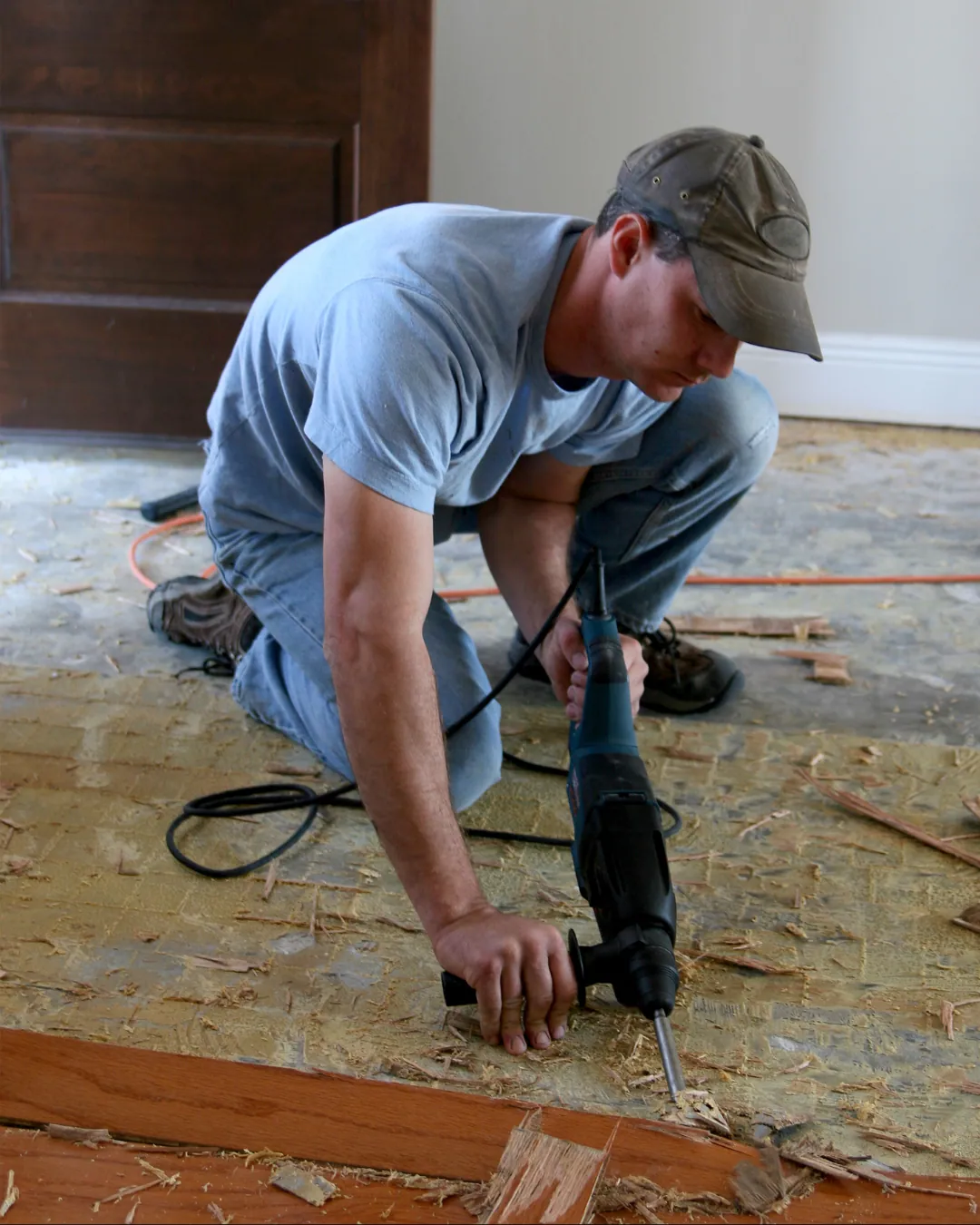
"Very happy with the work of this company on my new hardwood floors. Everything looks seamless and the crew was wonderful to work with. Great guys! Would recommend and use them again for any of my flooring needs."
Water on the Floor After a Leak or Burst Pipe: What to Do First
What to do in the first few hours after a leak, why water under a floor matters more than water on top of it, and how hardwood, vinyl, laminate and carpet each come through it.
Every winter in central Indiana, a cold snap brings a run of frozen and burst pipes, and with them a lot of wet floors. Dishwashers, water heaters, washing machine hoses and toilet supply lines do it the rest of the year. When it happens, the floor is usually the first thing people worry about and the last thing that should be dealt with. This guide covers what to do first, how each type of floor handles water, and how to tell whether the floor can stay or has to come out. One thing to know up front: TFPros installs new floors. We do not do water extraction, drying or repairs, so the first calls go to a plumber, a water mitigation company and your insurer. We come in once the house is dry.
The first hour: stop the water and stay safe
Shut off the water. Most houses have a main shutoff where the water line comes in, often in a basement, a crawl space or a utility closet near the water heater. It is worth finding yours before you ever need it. Individual fixtures usually have their own valve under the sink or behind the toilet.
If water has reached outlets, cords or anything electrical, or is near the electrical panel, keep out of it and turn the power off at the panel only if you can reach it safely from a dry place. If you cannot, call the power company or an electrician.
Then take photos and video of everything before you move or throw anything away: the source of the leak, the wet floor, and anything that was sitting in the water. Your insurer will want them.
The first day: get the water out and start drying
Pick up standing water with towels, a wet vac or a mop, lift furniture off the wet floor or put foil or plastic under the legs, and move rugs off it. Open the house up to dry air where you can, and run fans and a dehumidifier.
For anything more than a small spill, call a water mitigation company. They have moisture meters that can see water you cannot, and drying equipment that pulls water out from under floors and inside walls. The US Environmental Protection Agency advises drying wet materials within 24 to 48 hours to prevent mold growth, which is why the first day matters so much.
Call your homeowner's insurance company early. Coverage varies a lot between policies, and many treat a sudden burst pipe differently from a slow leak that went on for months. Ask what they need from you before anything is removed.

Water under the floor is the real problem
Water on top of a floor can be wiped up. Water that runs through the seams, under the edges or along the walls ends up on the subfloor, where it cannot evaporate and where nobody sees it. That is what leads to swelling, cupping, mold and a soft subfloor months later.
So even when the floor looks fine once the surface is dry, it is worth having the moisture under it checked, especially if water sat for more than a few hours or came from a supply line under pressure.
Luxury vinyl plank
Luxury vinyl plank comes through a leak better than anything else, because the planks themselves do not absorb water. That does not make the floor waterproof from top to bottom. A click-together vinyl floor floats over the subfloor, and water that gets under it can sit there trapped under a layer that does not let it dry.
After a significant leak, the usual answer is to lift the planks in the wet area, dry the subfloor, and re-lay them. Undamaged click planks can often go back down. This is one reason to keep the spare boxes from the original install: if a few planks are damaged in the process, you have matching ones. How to clean and care for vinyl plank and laminate explains why a plank from a different production run rarely matches.
Waterproof laminate
Laminate has a wood-fiber core. Waterproof laminate protects that core with sealed edges and a water-resistant surface, and the better lines are rated to hold up to a spill for a stated number of hours. That is a spill rating, not a flood rating. Water from a burst pipe that sits on the floor or gets underneath it for a day is outside what most laminate warranties cover.
Laminate that has taken on water usually shows it at the seams, where the edges swell and peak. Swollen laminate does not go back to flat when it dries, so swollen planks need replacing. Waterproof laminate: what the label actually promises covers the ratings in more detail.
Hardwood and engineered hardwood
Wood takes on water and swells, so a hardwood floor that gets wet will usually cup, with the edges of each board rising above the middle. Engineered hardwood resists it better than solid, but a long soak can still swell it or loosen the top layer.
The most important thing with a wet wood floor is patience. Cupping often settles back down a good deal as the floor dries, and drying a wood floor properly can take weeks. Sanding a cupped floor flat before it has fully dried is a common mistake: when the boards finish drying, the edges shrink back and leave the middle high. Gaps in hardwood floors in winter explains how wood moves with moisture.
If the boards have buckled off the subfloor, turned black, or stay soft or badly cupped once a moisture meter says the floor is dry, they usually need replacing.
Carpet and pad
Carpet pad soaks up water like a sponge and is very hard to dry in place, so after a leak the pad is usually replaced even when the carpet itself can be saved.
Where the water came from matters. Clean water from a supply line is one thing. Water from a toilet, a dishwasher or a washing machine is dirtier, and sewage or water that came in from outside is a health hazard. Carpet and pad soaked with dirty water should generally be removed and thrown away. The mitigation company will tell you which category your water falls into.
Preventing it this winter
Frozen pipes are the classic Indiana winter leak, and a few habits prevent most of them. Disconnect garden hoses and shut off and drain outdoor faucets before the first hard freeze. Keep the heat on in the house when you travel. On the coldest nights, open the cabinet doors under sinks on outside walls so warm air can reach the pipes.
For the rest of the year, check washing machine hoses, the water heater and the supply lines under sinks and toilets now and then, and replace anything cracked or bulging. Small leak sensors placed on the floor next to the water heater, the washer and under the sinks are inexpensive and can warn you before a small drip becomes a wet floor.
When the floor has to be replaced
Once the house is dry and the mitigation company is done, the decision is whether the old floor can stay. If it cannot, the replacement starts with the subfloor, which has to be dry, flat and sound before anything new goes over it. Subfloor prep covers what we check.
It is also a chance to choose a floor that suits the room better. A kitchen, laundry room or basement that has had one leak may well have another, and a waterproof floor is worth considering. Bathroom and laundry room flooring and the best waterproof flooring for basements go through the options.
We serve Greenwood, Indianapolis and the surrounding counties. Book a consultation once the area is dry, and tell us what happened and which rooms were affected.
Frequently asked questions
- What should I do first when water gets on my floor?
- Stop the water at the fixture valve or the main shutoff, stay away from anything electrical in the water, and photograph the damage. Then remove standing water, start drying with fans and a dehumidifier, and call a water mitigation company and your insurer for anything more than a small spill.
- Can luxury vinyl plank be saved after a leak?
- Often, yes. The planks do not absorb water, but water trapped under a floating vinyl floor needs to dry. The usual fix is to lift the planks in the wet area, dry the subfloor and re-lay them, replacing any damaged planks with spares from the original install.
- Will a cupped hardwood floor flatten out after water damage?
- It often improves a good deal as the floor dries, which can take weeks. Do not sand it flat before it is fully dry, or the boards can end up crowned. Boards that have buckled, turned black, or stay badly cupped once the floor tests dry usually need replacing.
- Does carpet need to be replaced after a leak?
- The pad usually does, because it holds water and is hard to dry in place. Carpet soaked with clean water can sometimes be dried and saved. Carpet and pad soaked with water from a toilet, appliance drain, sewage or outside flooding should generally be thrown away.
Explore the pages in this guide
Book a free in-home design consultation.
Factory-direct pricing across Indianapolis, Carmel, Fishers, and the surrounding metro. Quick installs of upper-end USA products - most projects wrap in 1 to 2 weeks, backed by a 1-year labor warranty plus the manufacturer's lifetime warranty - up to a 50-year hard surface lifespan.