"I hired this company a while back and they just texted me to check in and make sure everything is in good shape. That shows me how much they care about their work. Thankfully we have no issues, but I had to take a second to leave them a good word."
Entryway and Mudroom Flooring for Indiana Winters: Salt, Slush and Grit
The first six feet inside the door take more punishment between December and March than the rest of the house does all year. Which floors stand up to salt, slush and grit, and how to protect them.
If you want to know how a floor will hold up in a central Indiana house, do not look at the living room. Look at the six feet inside the back door in February. That is where melting slush, ice-melt residue and road grit come in on every pair of boots, and where a floor that looked fine in October starts to look dull, scratched or stained by spring. The entry and the mudroom are small areas, but they deserve a floor chosen for what winter actually does to them. Here is what that is, which floors handle it, and the inexpensive habits that make the biggest difference.
What winter actually brings through the door
Three things, and they work together.
Water. Snow on boots melts into puddles, and in a mudroom with a boot bench those puddles sit for hours. On most floors the problem is not a single spill but water that is there, on and off, every day for three months.
Ice melt. Rock salt and the other de-icers used on driveways and sidewalks get tracked in on soles and dissolve into that water. When it dries it leaves a whitish film that dulls a finish, and the crystals themselves are abrasive.
Grit. Sand and fine gravel from treated roads and driveways are the real wear on any floor. Every step grinds them into the surface like sandpaper, and it is the reason the area just inside a door wears out years before the rest of the floor. The hardwood cleaning guide explains why grit, more than anything else, decides how long a finish lasts.

Luxury vinyl plank: the default for mudrooms
For a mudroom, a back entry from the garage or a side door the kids actually use, luxury vinyl plank is what we recommend most often. The plank is waterproof through its full thickness, so a puddle under the boot bench is a cleaning job rather than a risk, and the premium lines have a wear layer built to take scratches from grit and dog claws.
It also does not mind the temperature swings an exterior door brings, it is warmer underfoot than tile, and it can run straight from the mudroom into the kitchen and hallway without a change of material. Standard vinyl plank gives the same waterproof surface at a lower price for a utility entry where budget leads.
Waterproof laminate: tougher surface, read the label
Waterproof laminate has the hardest surface of the plank floors, and the AC4 and AC5 lines handle abrasive grit very well. For a front entry and a hallway that see heavy traffic but are not routinely left wet, it is a strong choice.
The caveat is standing water. A laminate's water protection is rated for a stated period of time on the surface and at the joints, which is fine for a spill wiped up the same day and less fine for slush that sits under a bench overnight. In a working mudroom we lean toward vinyl. What the waterproof label actually promises explains the difference.
Hardwood at the front door
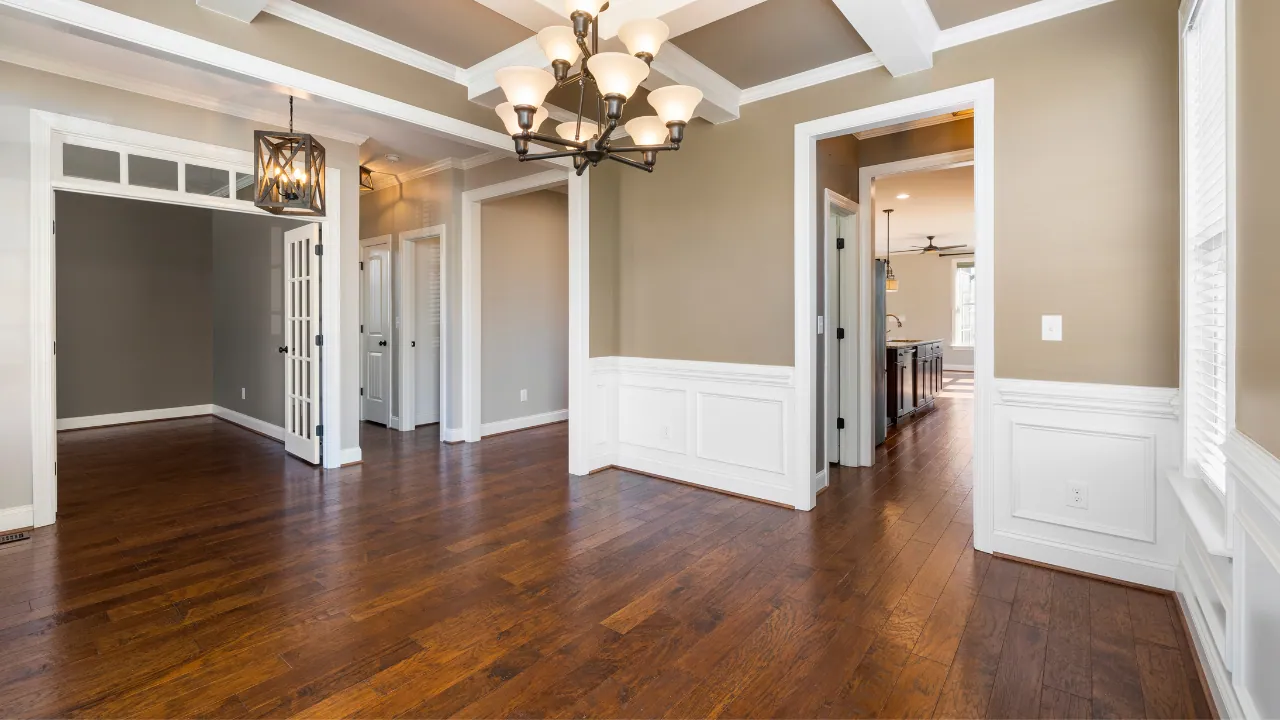
Plenty of homes have hardwood running right to the front door, and it can look wonderful there. A formal front entry that guests use and the family mostly does not is a reasonable place for it, provided the entry is protected.
What hardwood will not tolerate well is the mudroom routine: wet boots left on the floor, puddles that sit and salty water drying into the finish. In a house where the front door is the everyday door, keep a proper mat system in place all winter and wipe up water promptly, or consider carrying a waterproof floor through the entry and starting the hardwood a few feet in.
Carpet and the other options
Carpet does not belong inside an exterior door. It holds water and grit, and in an entry it shows a traffic path within a season.
Tile is a traditional mudroom floor and a durable one, and some homeowners prefer it. Where people choose vinyl plank instead, the usual reasons are warmth underfoot, no grout lines to stain with salt and mud, and the ability to run one continuous floor from the mudroom into the rest of the house.
The mat system does more than the floor
Whatever floor goes in, the single most effective protection costs very little: two mats, not one. A coarse scraper mat outside the door knocks off snow and the larger grit. A walk-off mat inside, long enough for a couple of steps, catches the water and the fine stuff before it reaches the floor.
A boot tray in the mudroom keeps the slush in one place instead of spread across the floor. Shake mats out and clean under them through the winter, because a mat that is saturated with grit is just moving it around.
Choose mats with care on vinyl. Some rubber and latex backings react with vinyl and leave a permanent yellow stain in the shape of the mat. Use mats labeled safe for vinyl flooring, or a woven mat on a non-staining pad. Caring for vinyl plank and laminate covers the cleaning products that are safe to use.
Getting the salt film off
The white haze from ice melt comes off with water and the right cleaner, not with force. Sweep or vacuum the grit first, so the mop is not dragging it across the surface, then damp-mop with a cleaner the flooring manufacturer approves. A mop that is damp, not wet, is the rule on every floor here, and on hardwood especially.
Do it regularly through the winter rather than once in spring. Residue that is left to build up is harder to remove and does more damage to the surface while it sits there.
Installation details at an exterior door
The doorway is where a mudroom or entry floor is most likely to fail, so it is worth knowing what a good install looks like there.
A floating floor needs an expansion gap at the walls, and that includes under or against the door threshold. It should be finished so water cannot run down into it. Pinning a floating floor tight under a threshold is a common cause of the planks lifting or buckling later.
Height matters at the door. A new floor that sits higher than the old one can catch the bottom of the door or the door sweep, and the door may need adjustment. Where the mudroom meets the garage there is often a step, and the edge of that step should be finished with a proper nosing rather than a raw plank edge. Where two floors meet covers how transitions and height changes are handled.
And look at the subfloor. Years of wet boots at a back door can soften the plywood underneath, and the time to find out is when the old floor is up. Subfloor prep covers what happens when it has.
Get it done before the first snow
Mudrooms and entries are small jobs, and they are much easier to do before the boots and the salt arrive than in the middle of them. They also pair well with a kitchen or hallway, since the same floor often runs through all three. The kitchen flooring guide covers that part of the house.
If you are in Greenwood, Indianapolis or the surrounding counties, book a free in-home consultation. We will look at the door, the threshold and the subfloor, and bring samples you can test against your own boots.
Frequently asked questions
- What is the best flooring for a mudroom?
- For most homes, luxury vinyl plank. It is waterproof through the plank, so puddles from boots are not a risk, the premium lines resist scratching from grit, and it can run continuously into the kitchen and hallway. Waterproof laminate has an even harder surface but is better suited to entries that are not routinely left wet.
- Does salt damage vinyl or laminate floors?
- Ice melt does not soak into vinyl, but the residue leaves a dull white film and the crystals and grit that come with it are abrasive. Use a two-mat system at the door, sweep up grit before mopping, and damp-mop with a manufacturer-approved cleaner regularly through the winter.
- Can I have hardwood flooring at my front door?
- Yes, if the entry is protected. A formal front entry with good mats inside and out is a reasonable place for hardwood. It is not suited to a working mudroom where wet boots sit on the floor, because standing water and salty residue damage the finish.
- What kind of entry mat is safe for vinyl plank floors?
- Use mats labeled safe for vinyl flooring, or a woven mat on a non-staining pad. Some rubber and latex backings react with vinyl and leave a permanent yellow stain. A coarse scraper mat outside the door and a longer walk-off mat inside work best together.
Explore the pages in this guide
Book a free in-home design consultation.
Factory-direct pricing across Indianapolis, Carmel, Fishers, and the surrounding metro. Quick installs of upper-end USA products - most projects wrap in 1 to 2 weeks, backed by a 1-year labor warranty plus the manufacturer's lifetime warranty - up to a 50-year hard surface lifespan.